
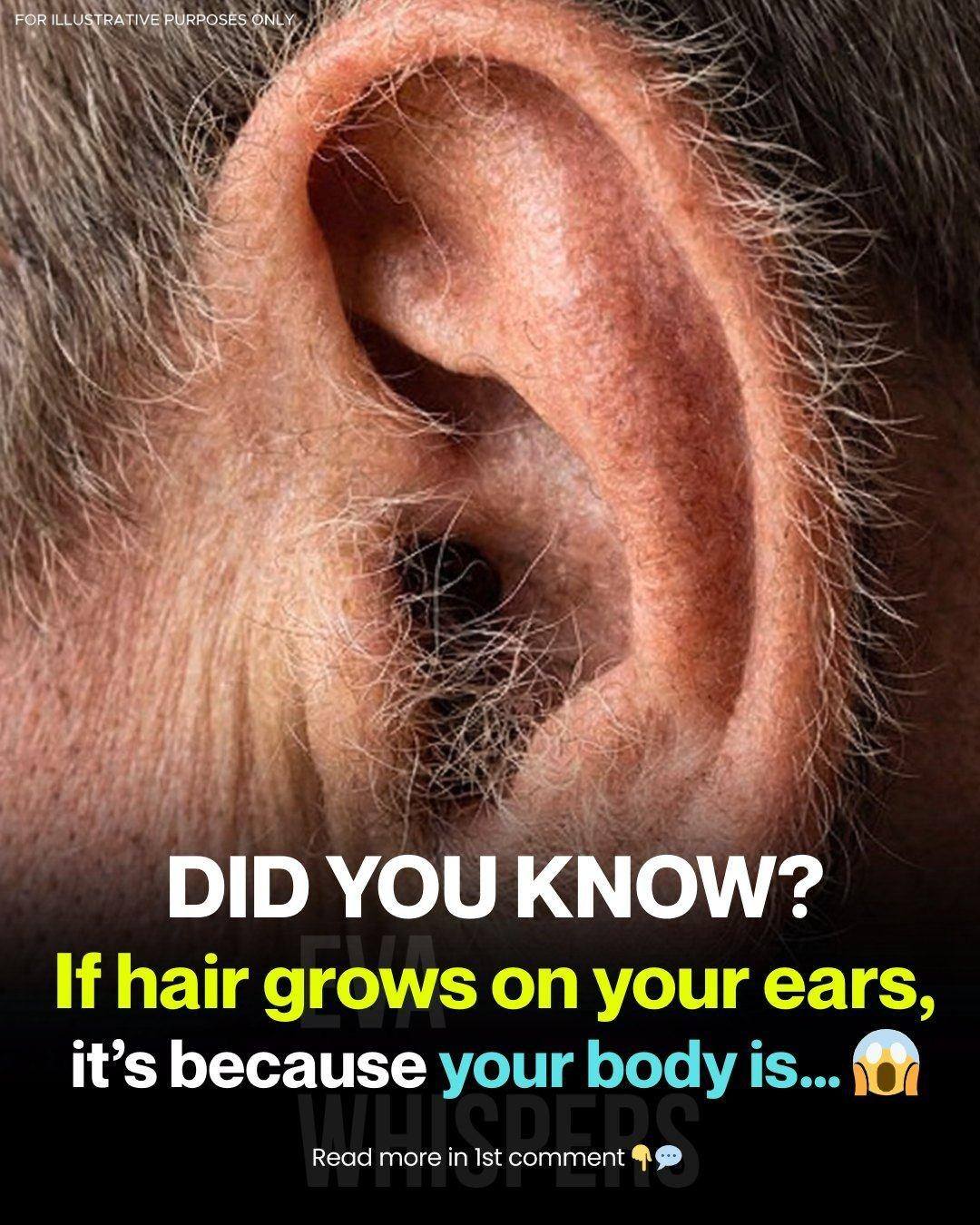
Ear hair is a common yet often overlooked aspect of aging that many people discover unexpectedly. Whether it’s a fleeting glance in the mirror or a barber’s offhand comment, the presence of ear hair can raise questions about its significance. Beyond being a mere cosmetic concern, ear hair is a biological response influenced by hormones, genetics, and the aging process. Let’s delve into the science behind ear hair, its genetic connections, and how to manage it effectively.
Why It Happens: The Science of “Migrating” Hair
It’s a familiar joke that as we age, hair seems to migrate from our scalp to our ears and nose. Biologically, this notion holds some truth. While most individuals have fine, vellus hairs on their ears, certain factors can cause these hairs to become darker and coarser over time.
The Testosterone Paradox
The primary factor driving this change is androgens, particularly testosterone. As we age, hair follicles in areas such as the ears, nose, and eyebrows often become more sensitive to these hormones. This sensitivity can lead to a paradoxical effect: while scalp follicles may shrink and contribute to baldness, ear follicles may respond by becoming more active.
Extended Growth Cycles
Aging also alters the “biological clock” of hair follicles. As we grow older, hairs tend to remain in the growth phase for extended periods and shed less frequently. This results in hair that is longer, thicker, and more wiry than in younger years.
