
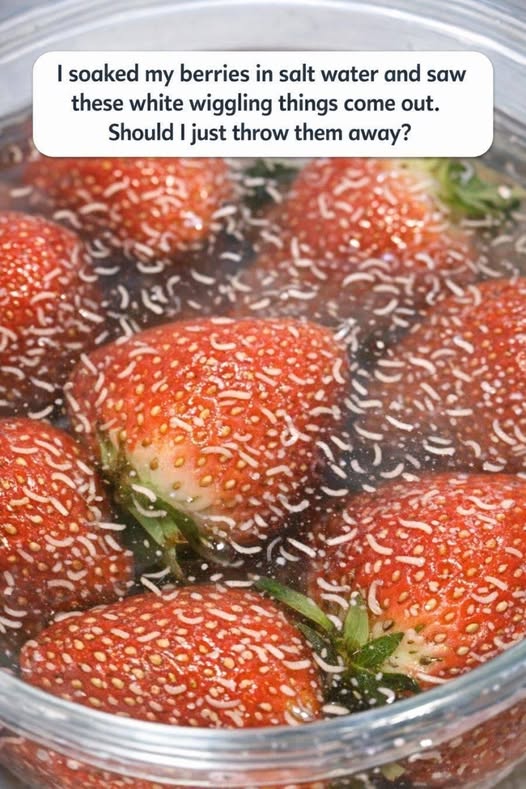
Berries are a favorite among fruit lovers, celebrated for their delightful taste and impressive health benefits. However, a recent viral trend involving soaking berries in salt water has sparked concern among consumers, as it often reveals tiny, white, wiggling creatures. This unsettling discovery has led many to question the safety of their beloved berries. In this article, we will explore what these creatures are, why they appear, and whether it is safe to consume berries after finding them. We will also provide expert advice on food safety and tips for cleaning your berries effectively.
What Are Those White Wiggling Things in My Berries?
The white wiggling creatures that emerge from berries when soaked in salt water are typically larvae of the Spotted Wing Drosophila (SWD), a type of fruit fly. These larvae are small, usually measuring around 1 to 5 millimeters in length, and are often difficult to spot with the naked eye while nestled inside the fruit. This is why they frequently go unnoticed until the salt water soak reveals them. These larvae can be found in various types of berries, including strawberries, blueberries, and raspberries, and they are not limited to either conventional or organic produce. The presence of larvae is a natural occurrence, as fruit flies lay their eggs on ripening fruit, allowing the larvae to develop inside.
Why Salt Water Soaks Make Hidden Bugs Suddenly Appear
Salt water soaks effectively draw out larvae from berries through a process called osmosis. When berries are submerged in a salt water solution, the difference in salt concentration inside and outside the larvae’s body causes water to exit their cells, dehydrating them and prompting them to wriggle out of the fruit. A typical salt water soak involves about 1 tablespoon of salt per cup of water, which is enough to encourage larvae to emerge without damaging the fruit. The soak usually lasts for about 15-30 minutes, during which time any larvae present will likely surface.
