
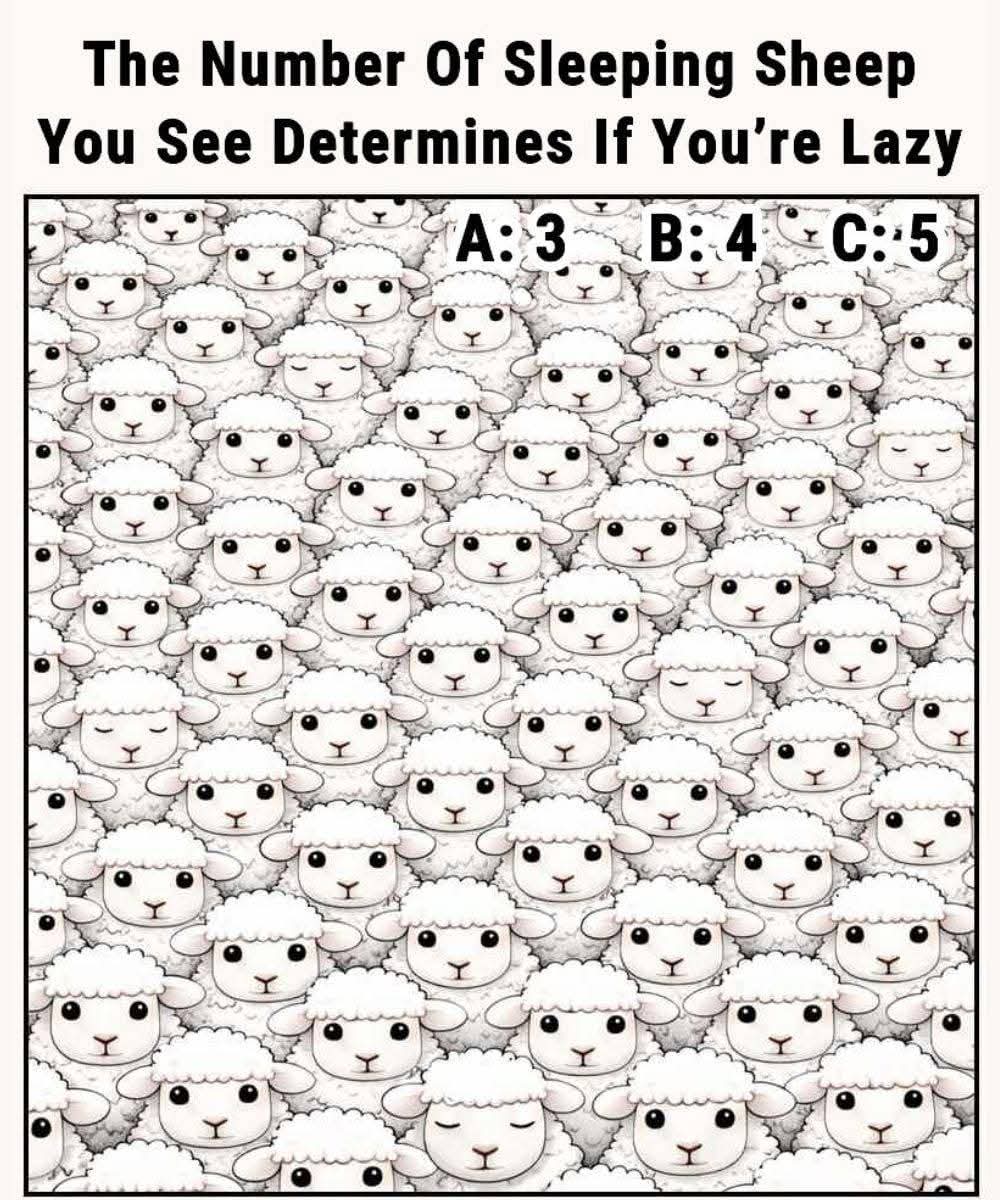
Have you ever encountered a seemingly simple image that challenges your perception? A field filled with cartoon sheep may look straightforward, but hidden among them are a few sleepy ones with their eyes closed, inviting you to count how many you can find. This lighthearted brain teaser not only entertains but also offers a glimpse into how your mind processes visual information. Let’s dive into the fascinating world of visual puzzles and what they reveal about our cognitive abilities.
The Allure of Visual Puzzles
Our brains are naturally inclined to detect patterns. When faced with a crowded image, such as a field of sheep, our minds instinctively group similar shapes together. The uniformity of the sheep creates a rhythm in our perception, but the subtle difference of closed eyes introduces a challenge. This variation tests our focus and attention to detail, revealing how quickly and accurately we can identify differences in a seemingly identical scene.
Visual puzzles engage several cognitive skills, including:
- Selective attention
- Pattern recognition
- Short-term memory
- Visual scanning abilities
These elements combine to make visual challenges both enjoyable and mentally stimulating.
