
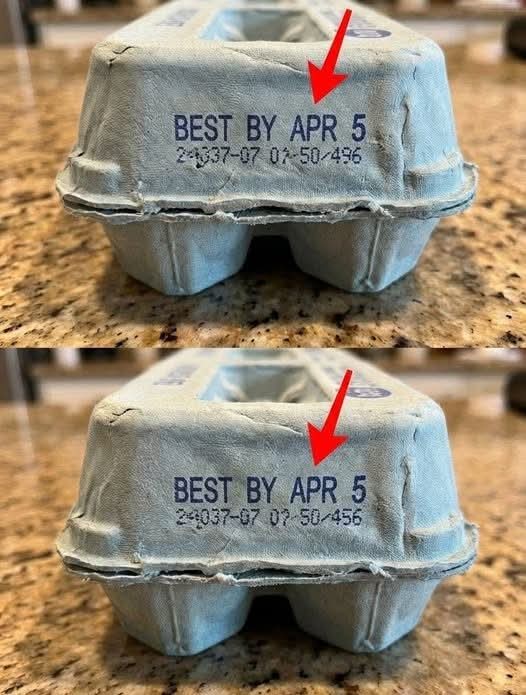
Have you ever noticed the three-digit number on your egg carton and wondered what it means? This seemingly random code is actually a crucial indicator of egg freshness and food safety. Ignoring this number could lead to unexpected foodborne illnesses, especially if you’re preparing dishes like quiche. Let’s unravel the mystery of the Julian date and learn how to ensure the eggs you use are safe and fresh.
The Three-Digit Number: What Is the Julian Date?
The number you see on your egg carton, typically ranging from 001 to 365, represents the Julian date—the day of the year when the eggs were packed. For example, 001 corresponds to January 1, while 365 indicates December 31. If your carton displays the number 120, it means the eggs were packed on April 30, the 120th day of the year.
It’s important to note that this number is not an expiration date; rather, it serves as a pack date, helping you gauge the freshness of your eggs.
How Long Are Eggs Safe to Eat?
According to USDA guidelines, raw eggs in their shells remain safe for consumption for 3 to 5 weeks after the pack date. Even if the sell-by date has passed, eggs may still be safe to eat. To ensure safety, always store eggs at a temperature of 40°F (4°C) or below. Remember, while the sell-by or best-by date helps stores manage inventory, the Julian date is the key factor for assessing safety and freshness.
## Why Your Quiche May Have Made Everyone Sick
Even if eggs appear and smell fine, they can still harbor Salmonella, a bacteria that can lead to severe abdominal cramps. Salmonella does not alter the egg’s appearance, smell, or taste, and it is not eliminated by simply cracking or mixing the eggs. To kill the bacteria, egg dishes must reach an internal temperature of 160°F (71°C). Be cautious, as a quiche that looks set may still be undercooked in the center.
