
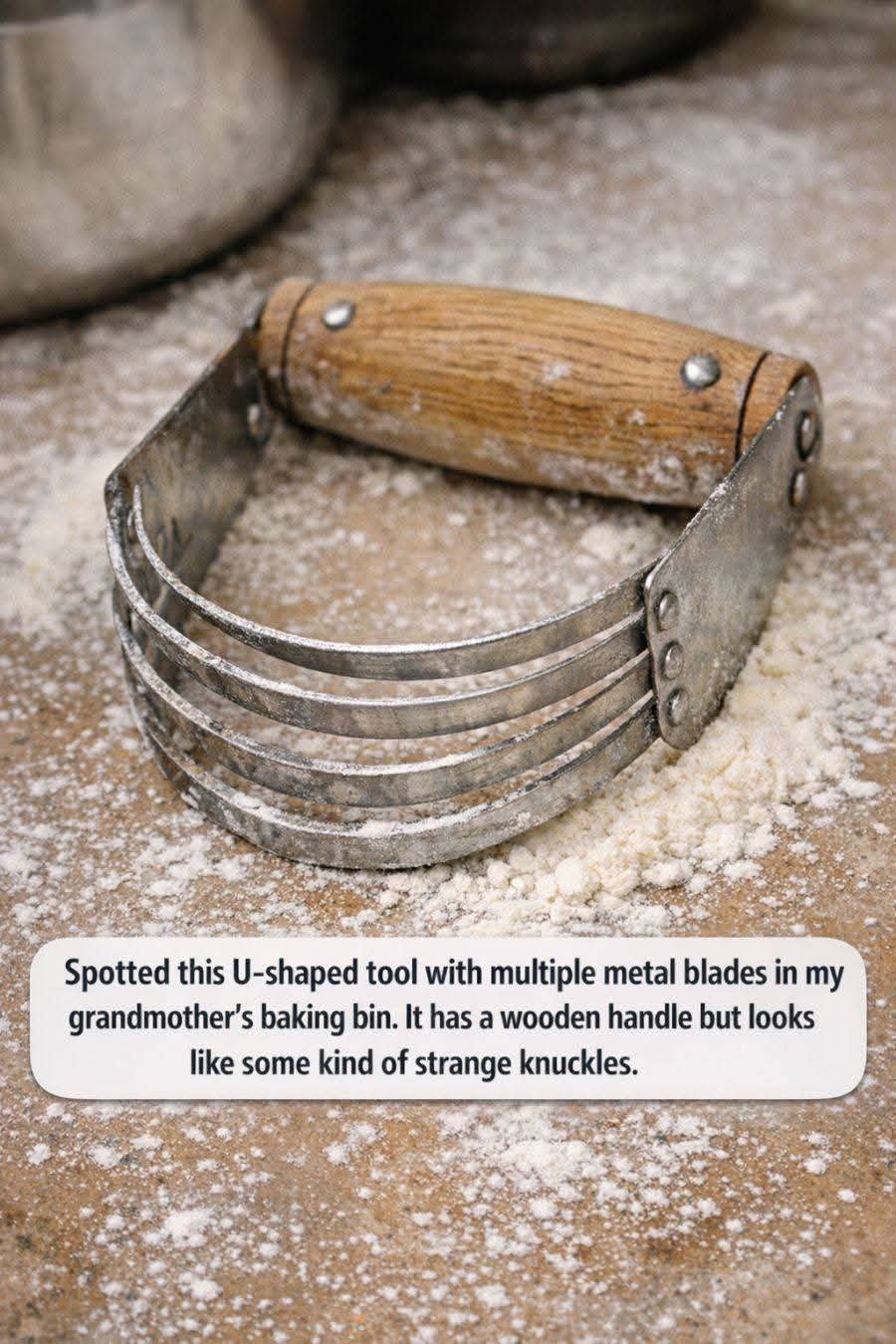
Have you ever stumbled upon a peculiar kitchen tool while exploring your grandmother’s baking supplies? This U-shaped contraption, with its wooden handle and metal blades, might look odd at first glance, but it holds a wealth of culinary history. The pastry blender, often mistaken for something else, is an essential tool that has helped generations of bakers achieve the perfect texture in their pastries. Let’s explore the fascinating world of this vintage kitchen implement and uncover its secrets.
The Mystery Tool: A Closer Look at Its Shape and Blades
Upon closer inspection, the pastry blender reveals itself as a U-shaped device, typically measuring about 5 inches in width, with a handle that fits comfortably in the palm of your hand. The handle is often made of wood, sometimes polished to a smooth finish, while the blades are spaced evenly apart, usually around 0.5 to 1 inch.
The metal blades, often stainless steel, are not sharp like a knife but are sturdy and slightly curved. This curvature allows the tool to rock back and forth or side to side, making it easier to cut through ingredients. The number of blades can vary, but most commonly, there are five, providing enough strength and coverage to perform its task efficiently.
Meet the Pastry Blender: The Classic Baker’s Secret Weapon
The tool is known as a pastry blender, a classic implement used for combining fat into flour to create dough. Its role in baking is crucial, as it helps achieve the flaky texture desired in pastries like pie crusts and biscuits.
Originating in the early 20th century, the pastry blender was invented to replace the less efficient methods of using knives or fingers to cut butter or shortening into flour. Its unique design allows for controlled pressure and movement, producing consistent results without overworking the dough.
How a Pastry Blender Works to Cut Fat into Flour
The primary function of a pastry blender is to cut fat, such as butter or shortening, into flour. This process is vital in creating a flaky texture in baked goods. The metal blades effectively break the fat into smaller pieces, which then become coated in flour. The goal is to achieve a mixture that resembles coarse crumbs or peas, indicating that the fat is evenly distributed.
This method helps to inhibit gluten formation, which occurs when flour and liquid are mixed. By limiting gluten development, the pastry remains tender and crumbly rather than tough. The pastry blender’s design allows for quick and uniform cutting, ensuring that the fat does not melt from the warmth of your hands.
