
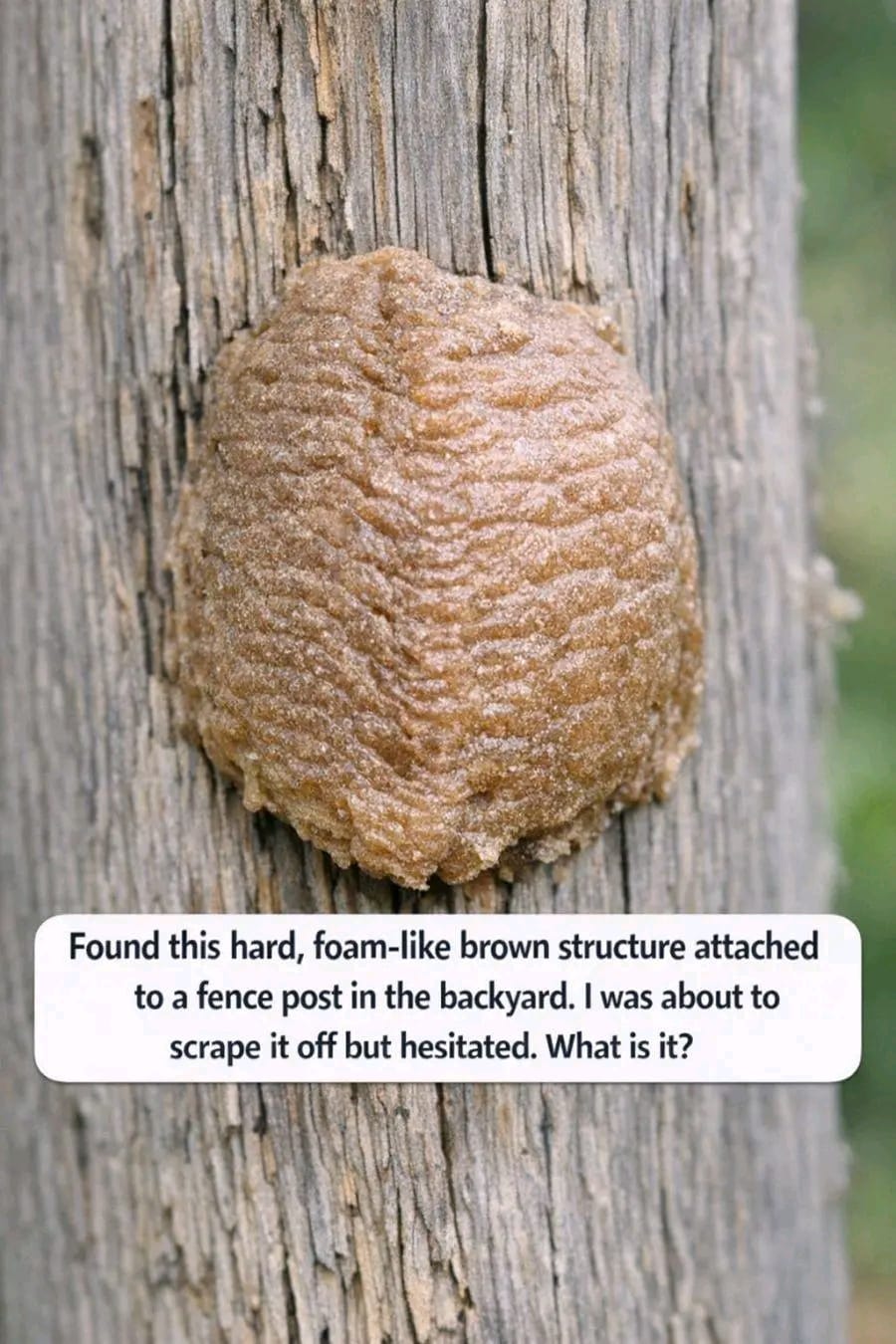
Discovering an unusual structure in your backyard can spark both intrigue and confusion. You might find a hard, foam-like brown object attached to a fence post or branch, raising questions about its nature and potential harm. Before you decide to remove it, it’s essential to understand what this structure is and its significance in your garden ecosystem. This article explores the fascinating world of praying mantis egg cases, their role in nature, and why you should think twice before disturbing them.
The Mystery Foam: What You’ve Found in Your Backyard
The egg case of a praying mantis, known as an ootheca, often surprises those who encounter it due to its peculiar appearance. Typically tan to light brown, this structure has a rough, foam-like texture that can easily be mistaken for a small wasp nest or a fungal growth. Measuring about 1 to 2 inches in length and roughly half an inch in width, these egg cases are usually found attached to twigs, stems, or man-made structures like fence posts.
People often hesitate when they find these brown blobs, unsure if they are harmful or beneficial. The unique texture and placement of the ootheca are specifically designed to protect the eggs from predators and harsh environmental conditions, showcasing a marvel of natural engineering.
Meet the Praying Mantis: Nature’s Beneficial Predator
Praying mantises are remarkable insects known for their predatory habits and distinctive appearance. With elongated bodies and prominent forelegs adapted for grasping prey, mantises are efficient hunters in the garden ecosystem. They feed on a variety of pests, including flies, crickets, and other insects that may harm plants. As part of the Mantodea order, these beneficial predators play a vital role in maintaining the balance of insect populations, making them welcome guests in many gardens.
Understanding the life cycle of these insects begins with recognizing their egg cases, which serve as the starting point for hundreds of new mantises each season.
The Structure of a Praying Mantis Egg Case
A praying mantis ootheca is a marvel of natural construction. Female mantises produce these egg cases in late summer or fall after mating. The female secretes a frothy liquid that hardens into a protective casing around the eggs, resembling an oblong, foam-like structure. This casing provides insulation and protection against predators and adverse weather conditions.
Upon close inspection, you will notice that the ootheca has a series of ridges or compartments, each containing multiple eggs. The texture is firm yet somewhat spongy, designed to withstand the elements while ensuring the safety of the developing embryos inside. The ingenious design of the ootheca allows it to remain secure and inconspicuous until the young mantises are ready to emerge.
