
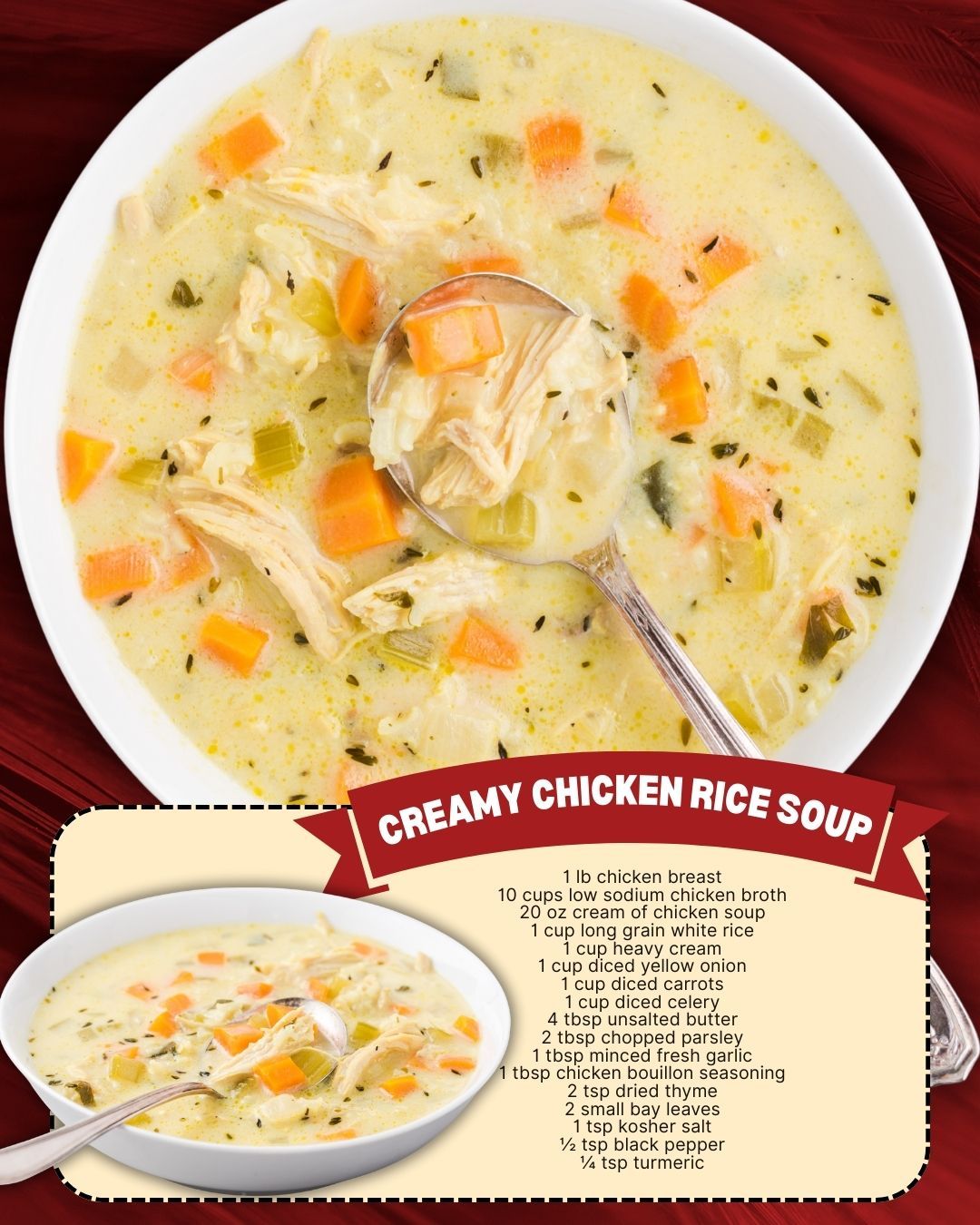
Making creamy chicken rice soup is a step-by-step process that builds flavor gradually. Patience and
attention to detail will ensure the best results.
- Prepare the ingredients: Begin by chopping the onion, garlic, carrots, and celery
into small, even pieces. Cut the chicken into bite-sized chunks. Rinse the rice thoroughly under
cold water until the water runs clear. - Sauté the vegetables: Heat butter or oil in a large pot over medium heat. Add the
onion and cook until soft and translucent. Stir in the garlic and cook briefly until fragrant. - Add carrots and celery: Incorporate the carrots and celery into the pot and sauté
for a few minutes. This step allows the vegetables to release their flavors. - Cook the chicken: Add the chicken pieces to the pot and cook until they are lightly
browned on the outside. This helps seal in flavor. - Add rice and broth: Stir in the rice, then pour in the chicken broth. Mix well to
prevent the rice from sticking to the bottom. - Simmer: Bring the soup to a gentle boil, then reduce the heat and let it simmer.
Cook until the rice is tender and the chicken is fully cooked. - Add cream: Slowly stir in the cream or milk. Allow the soup to heat through without
boiling to maintain a smooth texture. - Season: Add salt, pepper, and any herbs of your choice. Taste and adjust seasoning
as needed. - Final simmer: Let the soup simmer for a few more minutes until it reaches your
desired consistency.
The soup should be thick, creamy, and well-balanced in flavor. Stir occasionally to prevent sticking
and ensure even cooking.
Serving and Storage:
Creamy chicken rice soup is best served warm. It can be enjoyed on its own or paired with crusty bread,
crackers, or a light salad. Garnishing with fresh herbs such as parsley adds a fresh touch and enhances
presentation.
For storage, allow the soup to cool completely before transferring it to an airtight container. It can
be refrigerated for up to three days. Because rice continues to absorb liquid, the soup may thicken over
time. Adding a small amount of broth or milk when reheating can restore its original consistency.
Freezing is possible, but creamy soups may change texture slightly once thawed. If freezing, consider
adding the cream after reheating rather than before freezing for better results.
Tips:
- Use low heat when adding cream to avoid curdling.
- Stir frequently to prevent rice from sticking to the bottom of the pot.
- Adjust thickness by adding more broth or cream as needed.
- For extra flavor, sauté the rice briefly before adding broth.
- Taste often and adjust seasoning gradually.
These tips help ensure a consistent and satisfying outcome every time you prepare the soup.
Conclusion:
Creamy chicken rice soup is a comforting and versatile dish that fits many occasions. Its simple
ingredients and straightforward preparation make it accessible to cooks of all skill levels.
At the same time, its rich texture and balanced flavor give it a sense of warmth and satisfaction
that few dishes can match.
By understanding the role of each ingredient and following the step-by-step instructions, you can
create a soup that feels homemade and nourishing. Whether served as a main course or a starter,
this dish continues to be a favorite for good reason.
With proper storage and a few helpful tips, creamy chicken rice soup can be enjoyed beyond the day
it is made, making it both practical and delicious. It truly represents comfort food at its best.
FAQ:
Can I use leftover chicken?
Yes, cooked leftover chicken can be added during the simmering stage to save time.
What type of rice works best?
White rice is commonly used, but short-grain rice can make the soup even creamier.
How do I make the soup lighter?
Use milk instead of cream and reduce the amount of butter or oil.
Why did my soup become too thick?
Rice absorbs liquid over time. Simply add more broth or milk when reheating.
Can I add more vegetables?
Yes, vegetables like peas or corn can be added for extra texture and flavor.
