
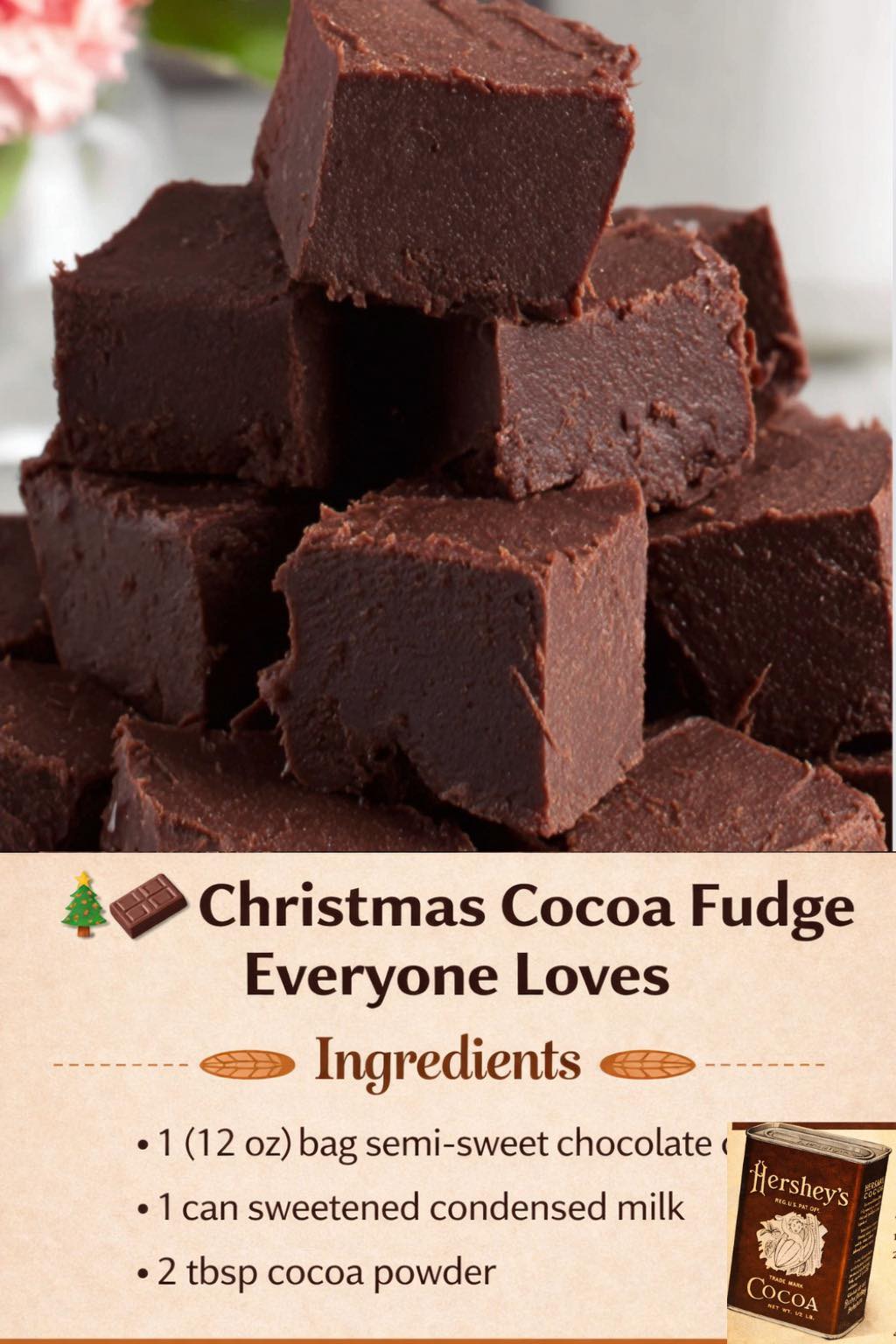
Preparation is key when making fudge. Before beginning, line an 8-inch square pan with foil or parchment paper and lightly grease it. This ensures easy removal once the fudge has set.
- In a heavy-bottomed saucepan, combine the granulated sugar and cocoa powder. Stir them together thoroughly while dry to prevent lumps from forming later.
- Gradually add the milk while stirring constantly. This step helps dissolve the dry ingredients evenly and prevents scorching.
- Place the saucepan over medium heat and bring the mixture to a steady boil, stirring frequently. Once boiling, reduce stirring slightly and allow the mixture to cook evenly.
- Continue cooking until the mixture reaches the soft-ball stage, approximately 234°F (112°C) on a candy thermometer. Accuracy at this stage is critical for proper texture.
- Remove the saucepan from heat and add the butter without stirring. Allow it to melt naturally into the mixture.
- Let the mixture cool undisturbed until it reaches about 110°F (43°C). This cooling phase is essential for smooth, creamy fudge.
- Add the vanilla extract and beat the mixture vigorously until it thickens and loses its glossy sheen.
- Quickly pour the fudge into the prepared pan and spread evenly. If using nuts, fold them in just before pouring.
Allow the fudge to set at room temperature until firm. Avoid refrigeration during this stage, as it can affect texture.
Serving and Storage:
Once fully set, remove the fudge from the pan and cut it into uniform squares using a sharp knife. For clean cuts, wipe the knife between slices.
Hershey’s Classic Cocoa Fudge is best served at room temperature, where its creamy texture and rich flavor are most pronounced. It pairs well with coffee, milk, or as part of a dessert platter.
For storage, place the fudge in an airtight container. It can be kept at room temperature for up to one week or refrigerated for up to three weeks. If refrigerating, allow the fudge to return to room temperature before serving for optimal texture.
Tips:
- Always use a heavy-bottomed saucepan to prevent scorching.
- A candy thermometer greatly improves consistency and accuracy.
- Avoid stirring during the cooling phase to prevent grainy texture.
- Measure ingredients precisely; even small deviations can affect results.
- If your fudge turns out grainy, it may have been overcooked or stirred too early.
Patience and attention to detail are the most important tools when making fudge. Rushing the process often leads to disappointing results.
Conclusion:
Homemade Hershey’s Classic Cocoa Fudge is more than just a dessert—it is a tradition rooted in careful technique and simple ingredients. By understanding the role of each component and following the steps with precision, anyone can achieve professional-quality results at home.
This guide demonstrates that fudge-making is not mysterious or overly complex, but rather a methodical process that rewards focus and practice. With time, you may even develop your own variations while preserving the essence of this classic treat.
Whether shared with loved ones or enjoyed quietly, this fudge offers a rich reminder that some of the best sweets are made in your own kitchen.
FAQ:
Q: Why is my fudge grainy?
A: Graininess is usually caused by overcooking, stirring too early, or sugar crystals forming on the sides of the pan.
Q: Can I make this fudge without a thermometer?
A: Yes, but it is more challenging. The soft-ball stage can be tested using cold water, though a thermometer is more reliable.
Q: Can I freeze cocoa fudge?
A: Yes, fudge can be frozen for up to three months if wrapped tightly. Thaw at room temperature before serving.
Q: Can I reduce the sugar?
A: Reducing sugar may affect texture and structure. Fudge relies on precise sugar ratios for proper setting.
Q: Is Hershey’s cocoa required?
A: While other cocoa powders can be used, Hershey’s provides the classic flavor associated with this recipe.
