
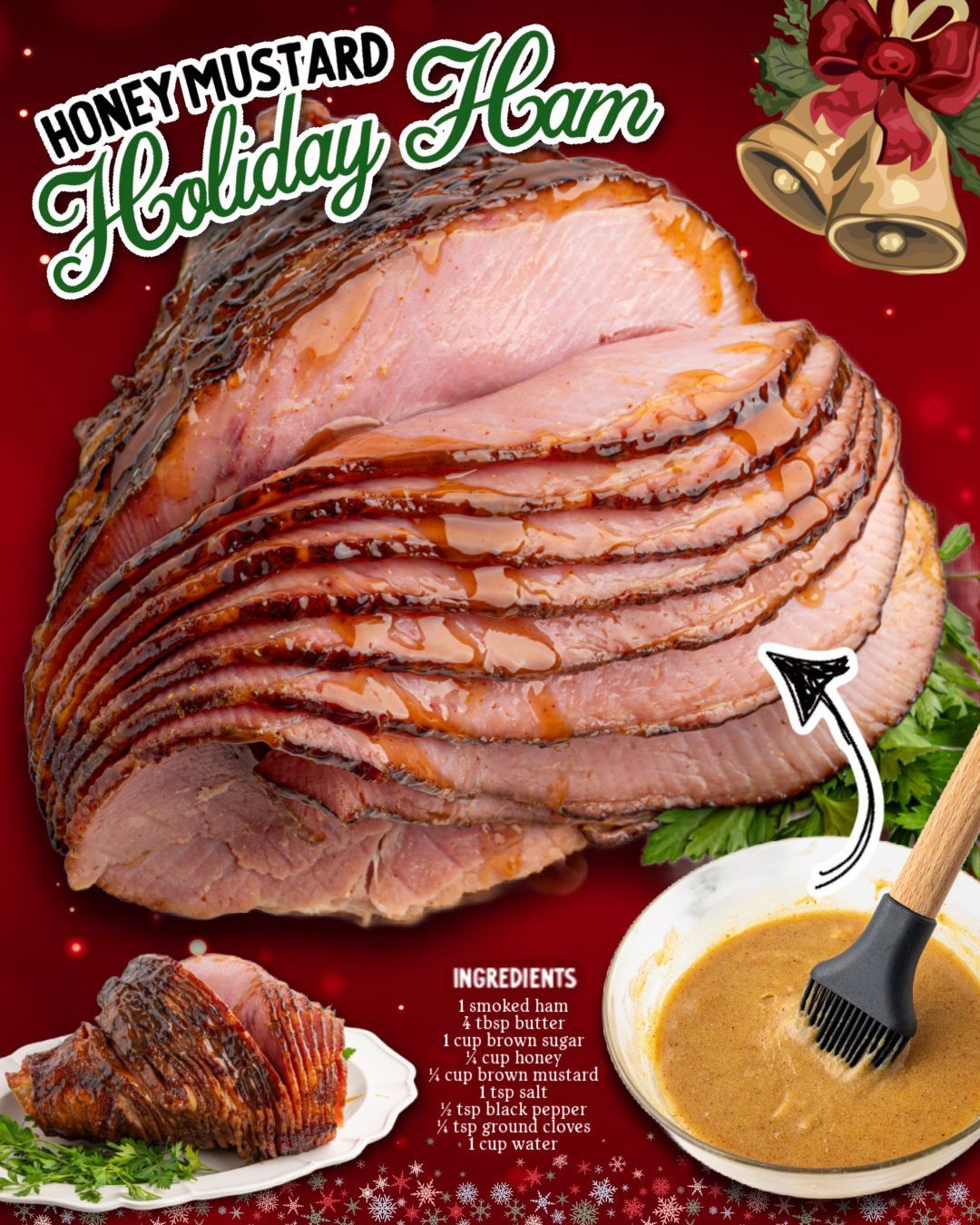
Preparing a roasted ham is more about patience and attention than complexity. Follow these steps
carefully to achieve a tender, flavorful result with a beautifully caramelized glaze.
Step 1: Prepare the Oven and Ham
Preheat your oven to 325°F (165°C). Remove the ham from its packaging and place it cut-side down in
a large roasting pan. Positioning the ham this way helps retain moisture and prevents the exposed
spiral slices from drying out.
Step 2: Add Moisture
Pour one cup of water into the bottom of the roasting pan. This creates steam during cooking, which
helps keep the ham juicy and prevents the sugars in the glaze from burning too quickly.
Step 3: Make the Glaze
In a medium bowl, whisk together the melted butter, brown sugar, honey, spicy brown mustard, salt,
black pepper, and ground cloves. Stir until the mixture is smooth and well combined. The glaze should
be thick but pourable, with a rich aroma from the spices.
Step 4: Apply the Glaze
Brush or spoon half of the glaze evenly over the surface of the ham, making sure it seeps between the
spiral slices. If desired, insert whole cloves into the surface of the ham for added visual appeal
and subtle spice.
Step 5: Cover and Roast
Cover the ham loosely with aluminum foil and place it in the preheated oven. Roast for approximately
15–18 minutes per pound, or until the internal temperature reaches 140°F (60°C). Baste the ham with
pan juices halfway through cooking.
Step 6: Finish with a Caramelized Glaze
During the final 30 minutes of cooking, remove the foil and brush the remaining glaze over the ham.
Return it to the oven uncovered, allowing the glaze to thicken and caramelize into a glossy, golden
coating.
Step 7: Rest Before Serving
Once cooked, remove the ham from the oven and let it rest for 15–20 minutes. This allows the juices
to redistribute, making each slice more tender and flavorful.
Serving and Storage:
This roasted ham is best served warm, sliced along the spiral cuts for easy portioning. It pairs
beautifully with classic side dishes such as roasted vegetables, mashed potatoes, green beans, or
fresh dinner rolls. The sweet and savory glaze complements both simple and elaborate accompaniments.
For storage, allow any leftovers to cool completely before transferring them to an airtight container.
Refrigerated ham will stay fresh for up to four days. For longer storage, slices can be frozen for up
to two months. When reheating, cover the ham with foil and warm gently in the oven to prevent drying.
Tips:
- Allow the ham to come to room temperature for about 30 minutes before roasting for more even heating.
- Baste regularly to enhance flavor and keep the surface moist.
- If the glaze begins to darken too quickly, tent the ham loosely with foil.
- Use a meat thermometer to avoid overcooking and ensure optimal tenderness.
- Save the ham bone to make soups or stocks for future meals.
Small details, such as proper resting time and careful glazing, can make a noticeable difference in
the final dish. These tips help ensure consistent and impressive results every time.
Conclusion:
A roasted ham with a rich, flavorful glaze is more than just a main course—it’s a tradition that brings
people together. This recipe offers a thoughtful balance of sweetness, spice, and savory depth, making
it suitable for holidays and special occasions alike.
By following this guide, you can confidently prepare a ham that is tender, visually stunning, and
crowd-pleasing. From the first slice to the last leftover sandwich, this dish delivers comfort and
celebration in every bite.
FAQ:
Can I use a different type of ham?
Yes, but cooking times may vary. Bone-in, spiral-cut smoked ham is recommended for best flavor and
ease of preparation.
Is the glaze very spicy?
No, the spicy brown mustard adds tang rather than heat. The overall flavor remains balanced and mild.
Can I prepare the glaze in advance?
Yes, the glaze can be made up to two days ahead and stored in the refrigerator. Warm slightly before use.
How do I prevent the ham from drying out?
Keeping the ham covered for most of the cooking time and adding water to the pan helps retain moisture.
What can I do with leftovers?
Leftover ham is versatile and can be used in sandwiches, omelets, soups, or casseroles.
