
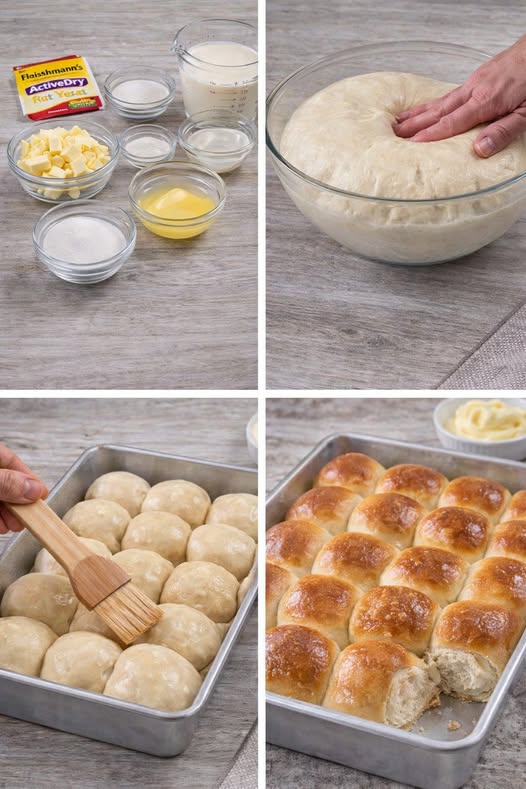
Follow these simple steps to make your own Amish White Bread:
- Activate the yeast: In a large bowl, combine the warm water and sugar. Sprinkle the yeast over the top
and stir gently. Let the mixture sit for 5–10 minutes until the yeast becomes frothy. This ensures that the yeast is active. - Combine the dry ingredients: In another bowl, whisk together the all-purpose flour and salt.
- Mix the dough: Once the yeast mixture is frothy, add the melted butter and the flour mixture to the bowl.
Stir until the dough begins to come together. If it’s too sticky, gradually add a little more flour until it forms a soft,
elastic dough. - Knead the dough: Turn the dough out onto a floured surface and knead for about 8-10 minutes,
or until it becomes smooth and elastic. You can also use a stand mixer with a dough hook for this step. - Let the dough rise: Place the dough in a lightly greased bowl and cover with a clean kitchen towel.
Let it rise in a warm, draft-free area for about 1–2 hours, or until the dough has doubled in size. - Shape the dough: Once the dough has risen, punch it down gently to release the air. Shape it into a loaf
and place it into a greased 9×5-inch loaf pan. - Second rise: Cover the pan with a towel and let the dough rise again for 30–45 minutes, until it
has risen above the rim of the pan. - Bake: Preheat your oven to 350°F (175°C). Bake the bread for 25–30 minutes, or until the top is golden
brown and the loaf sounds hollow when tapped on the bottom. - Cool: Remove the bread from the pan and let it cool on a wire rack before slicing.
Serving and Storage
Amish White Bread is perfect for sandwiches, toast, or just enjoyed with butter and jam. It can also be served as a side to
soups, salads, or hearty stews.
Store the bread in a plastic bag or airtight container at room temperature for up to 3–4 days. For longer storage, slice
the bread and freeze it for up to 3 months. Simply toast slices directly from the freezer for an easy snack or meal addition.
Tips
- For a softer crust, brush the top of the loaf with melted butter immediately after baking.
- If you prefer a more rustic look, you can skip the loaf pan and shape the dough into a round or oval boule and bake it on a
baking sheet. - To ensure your yeast is fresh, always check the expiration date. If your yeast doesn’t foam up when activated, it’s
likely expired and should be replaced. - If you want to enhance the flavor of the bread, you can let the dough rise in the refrigerator overnight for a slow
fermentation process.
Variations
Amish White Bread is a classic recipe, but there are plenty of ways to modify it based on your tastes and preferences.
- Whole Wheat Amish Bread: Replace half of the all-purpose flour with whole wheat flour for a heartier loaf.
- Honey Amish Bread: Substitute the sugar with honey for a subtle sweetness and a slightly different flavor.
- Garlic Herb Amish Bread: Add minced garlic and dried herbs (like rosemary or thyme) to the dough for a savory twist.
- Cinnamon Swirl Amish Bread: Roll the dough out into a rectangle, spread with butter and cinnamon-sugar,
then roll it up before baking for a sweet, breakfast-style bread.
Conclusion
There’s something incredibly satisfying about making your own bread from scratch, and Amish White Bread is a perfect
recipe to begin with. The soft, pillowy texture and lightly sweet flavor make it an all-time favorite in many households.
Whether you’re making it for sandwiches, toast, or just as a comforting side dish, this homemade bread will become a staple
in your kitchen.
Best of all, it’s easy to master and versatile enough to adapt to your tastes, making it a perfect foundation for all kinds
of delicious variations.
FAQ
Can I use active dry yeast instead of instant yeast?
Yes, but you’ll need to activate the active dry yeast in warm water before adding it to the mixture. Allow it to sit for 5-10
minutes until foamy.
Can I double the recipe?
Yes, you can double the ingredients and bake two loaves. You may need to adjust the baking time slightly for larger loaves.
Why did my bread turn out dense?
If your bread is dense, it may not have risen enough during either rise, or the dough might have been overworked. Make sure the
yeast is fresh and give the dough ample time to rise.
Can I make this recipe in a bread machine?
Yes, this recipe can be adapted for a bread machine. Follow the instructions specific to your machine, adding ingredients in the
recommended order.
