
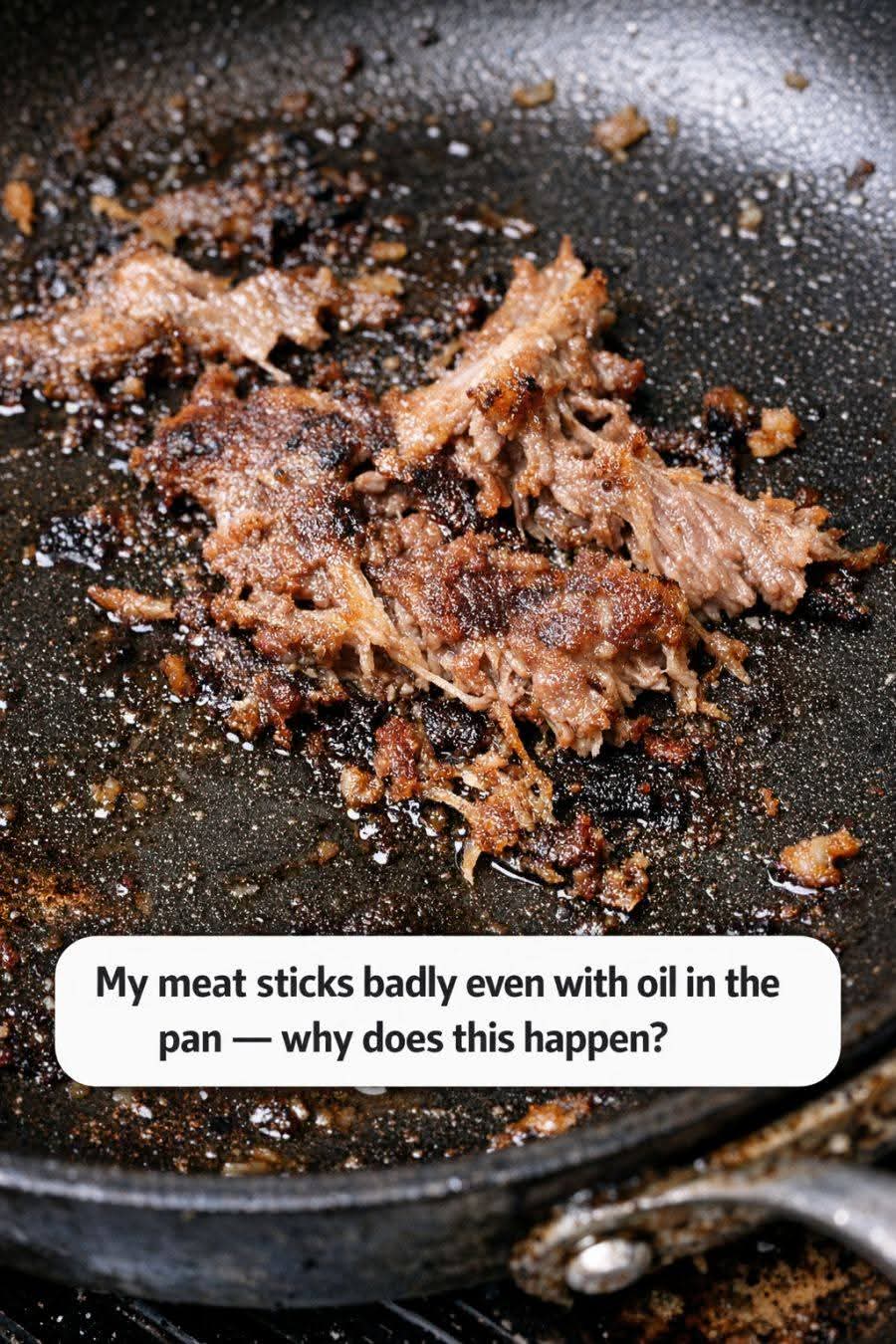
The Right Amount of Oil: A Balancing Act
Oil serves as a lubrication barrier between the meat and the pan. However, using too little oil can lead to sticking, while too much can cause splattering and uneven cooking. The ideal amount is about 1 to 2 tablespoons for a standard-sized skillet, ensuring an even coating without excess.
Choosing the Right Pan for Cooking Meat
Different pans have varying properties that affect sticking. Nonstick pans minimize the risk of sticking but may hinder browning. Stainless steel pans provide excellent browning but require precise temperature control to avoid sticking. Cast iron pans offer even heating and can become naturally nonstick with proper seasoning. Understanding the characteristics of your pan is essential for successful cooking.
Managing Surface Moisture for Better Searing
Moisture on the surface of the meat is a significant contributor to sticking. When wet meat is placed in a pan, the moisture turns to steam, preventing a proper sear and leading to sticking. To combat this, pat the meat dry with paper towels before cooking to reduce surface moisture and enhance the searing process.
The Importance of Patience: Letting Meat Release Naturally
A common mistake is attempting to move the meat too soon. Initially, meat will stick, but after a few minutes of cooking, it will naturally release as the proteins denature and form a crust. Patience is key—wait until the meat releases itself before flipping or stirring.
Avoiding Burnt Marinades and Seasonings
Marinades and seasonings containing sugars can caramelize quickly and stick to the pan, particularly if the pan is too hot. To prevent this, consider cooking the meat at a slightly lower temperature or adding these ingredients later in the cooking process. Additionally, ensure any excess marinade is wiped off before cooking.
