
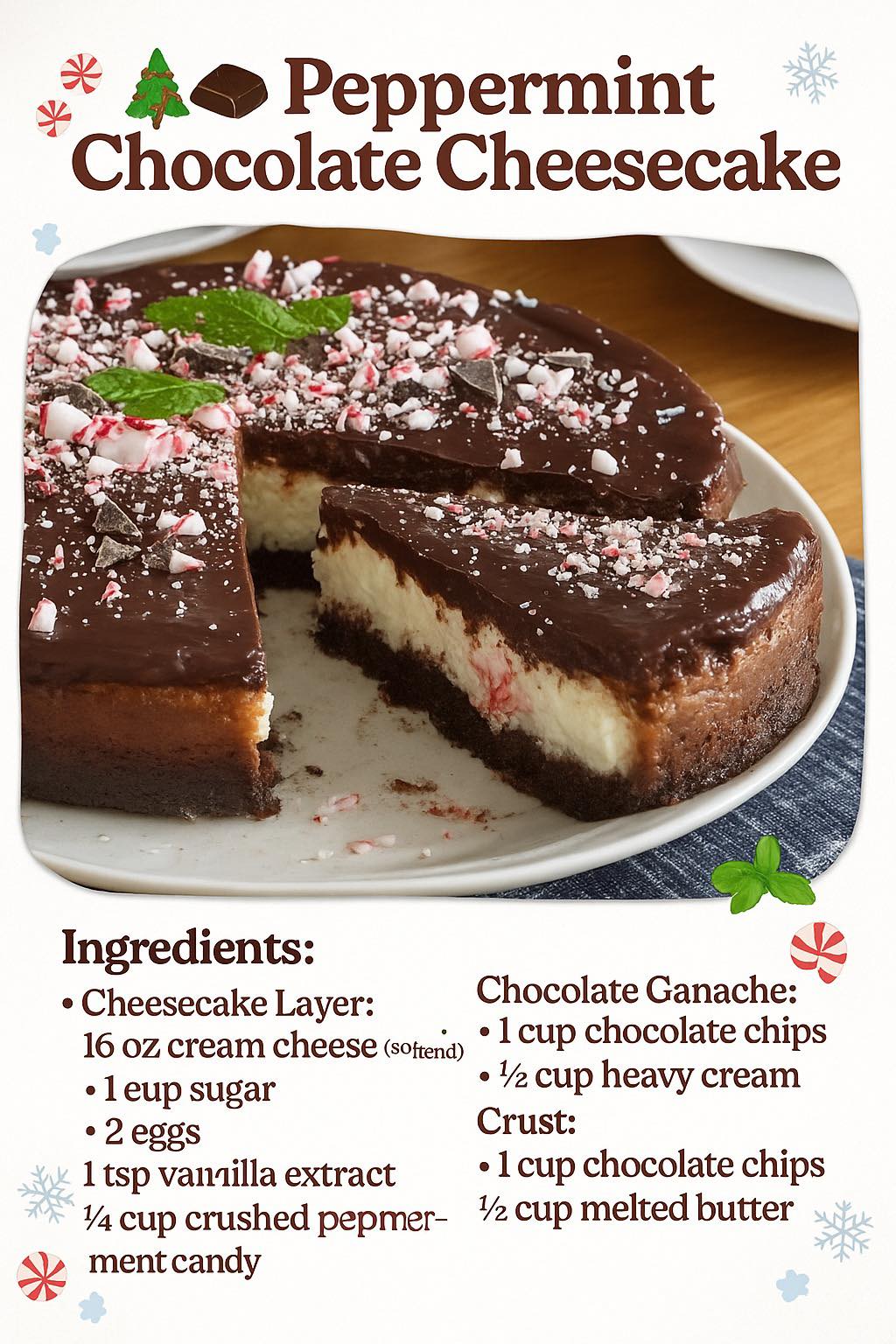
The method for this recipe is designed to support a smooth cheesecake texture, proper bake, and stable cooling.
Following each step closely will help avoid common cheesecake pitfalls—cracking, sinking, or uneven texture.
1. Prepare the Crust
Preheat your oven to 325°F (163°C). In a medium bowl, combine chocolate cookie crumbs, granulated sugar, melted
butter, and the optional peppermint extract. Stir until the mixture resembles damp sand and the crumbs are fully
coated. Press the mixture firmly into the bottom of a 9-inch springform pan. Use the bottom of a glass or measuring
cup to compact it evenly, ensuring a stable base.
Bake the crust for 10 minutes, then remove it from the oven and allow it to cool while you prepare the filling.
This brief bake helps the crust set, giving it a pleasant firmness that contrasts with the creamy cheesecake interior.
2. Prepare the Filling
In a large mixing bowl, beat the softened cream cheese until smooth and free of lumps. This step is crucial—cream
cheese that is not fully softened may result in a grainy filling. Add the sugar and continue mixing until the
texture is uniformly creamy.
Next, add the eggs one at a time. Beat each egg just until combined; over-mixing can incorporate too much air,
which contributes to cracking. Add the sour cream, vanilla extract, peppermint extract, and salt, mixing gently.
Finally, carefully pour the melted chocolate into the mixture. Ensure the chocolate is warm but not hot, as hot
chocolate could scramble the eggs. Incorporate the cocoa powder to enhance the depth of the chocolate flavor.
Mix until the batter is smooth and glossy.
3. Assemble and Bake
Pour the filling onto the cooled crust. Smooth the surface with a spatula. To prevent cracking, it’s helpful to
bake the cheesecake in a water bath. Wrap the bottom and sides of the springform pan in aluminum foil to protect
against leaks, then place it inside a larger pan filled halfway with hot water.
Bake at 325°F (163°C) for 55 to 70 minutes. The center should still jiggle slightly when the pan is nudged—this is
a sign the cheesecake is properly cooked without being over-baked. If the edges look puffed or begin to brown,
remove it from the oven.
4. Cooling
Turn off the oven, crack the door open slightly, and allow the cheesecake to cool inside for one hour. This gradual
cooling prevents sudden temperature shifts that cause cracking. After one hour, remove it from the oven and allow it
to cool to room temperature. Finally, refrigerate for at least 6 hours or overnight to allow the flavors to meld
and the structure to firm.
5. Add the Topping
Right before serving, whip the heavy cream with powdered sugar and peppermint extract until medium peaks form.
Spread or pipe the whipped cream onto the cheesecake and add chocolate shavings, peppermint pieces, or any garnish
you prefer. These finishing touches provide both visual appeal and layers of complementary texture.
Serving and Storage
For clean slices, warm a knife under hot water, wipe it dry, and cut using a gentle downward motion. This method
preserves the defined layers and prevents smearing.
The cheesecake should be stored in the refrigerator, tightly covered. It will maintain freshness for about five days.
If you prefer to prepare it in advance, the undecorated cheesecake can be frozen for up to two months. Wrap it twice
in plastic wrap and once in aluminum foil to prevent freezer burn. To serve, thaw it in the refrigerator overnight,
then add the whipped topping and garnishes as desired.
Tips
Taking a moment to understand the nuances of cheesecake preparation can vastly improve your results. The following
tips help prevent common issues while enhancing the overall flavor and presentation:
- Use room-temperature dairy: This prevents lumps and ensures smooth blending.
- Choose quality chocolate: A richer chocolate produces a more luxurious cheesecake.
- Avoid over-mixing: Too much air in the batter causes cracks and a dry texture.
- Water baths work: They regulate temperature and provide essential moisture during baking.
- Cool slowly: Gradual cooling prevents dramatic temperature shocks that cause structural issues.
- Adjust peppermint flavoring to taste: Peppermint can easily overpower; start small and add more if needed.
- Don’t skip chilling: Proper chilling sets the cheesecake and perfects its texture.
Conclusion
Peppermint Chocolate Cheesecake is a dessert that provides not only flavor but also an experience. The interplay of
refreshing peppermint and velvety chocolate brings seasonal nostalgia while still feeling sophisticated. Mastering
this recipe offers a sense of accomplishment, giving you a dessert that photographs beautifully, slices cleanly, and
delights guests every time.
With proper technique—from preparing the crust to managing the bake and adding thoughtful finishing touches—you can
create a cheesecake that rivals those found in professional bakeries. Whether you savor it during the holidays or
prepare it simply as a treat for yourself, this dessert is a reminder of the joy that comes from culinary craft.
FAQ
1. Can I make this cheesecake without a water bath?
Yes, but a water bath significantly reduces the risk of cracking. If you skip it, monitor the bake closely and avoid
over-baking. You can also place a pan of hot water on the lower oven rack to introduce moisture.
2. Can I use milk chocolate instead of dark or semisweet?
You can, but milk chocolate will produce a sweeter and less intense chocolate flavor. If using milk chocolate,
consider reducing the sugar in the filling slightly to maintain balance.
3. How strong should the peppermint flavor be?
Peppermint extract is potent, so a small amount goes a long way. The recipe offers a balanced starting point, but
you can reduce or increase the extract to tailor the flavor to your preference.
4. Why did my cheesecake crack?
Cracking can occur due to over-mixing, sudden temperature changes, or over-baking. Using a water bath, cooling the
cake gradually, and mixing the filling gently greatly reduce the chances of cracks forming.
5. Can I freeze the cheesecake after adding whipped cream?
It’s best to freeze the cheesecake without the whipped topping. Whipped cream can lose its structure during freezing
and thawing. Add toppings after thawing for the best results.
