
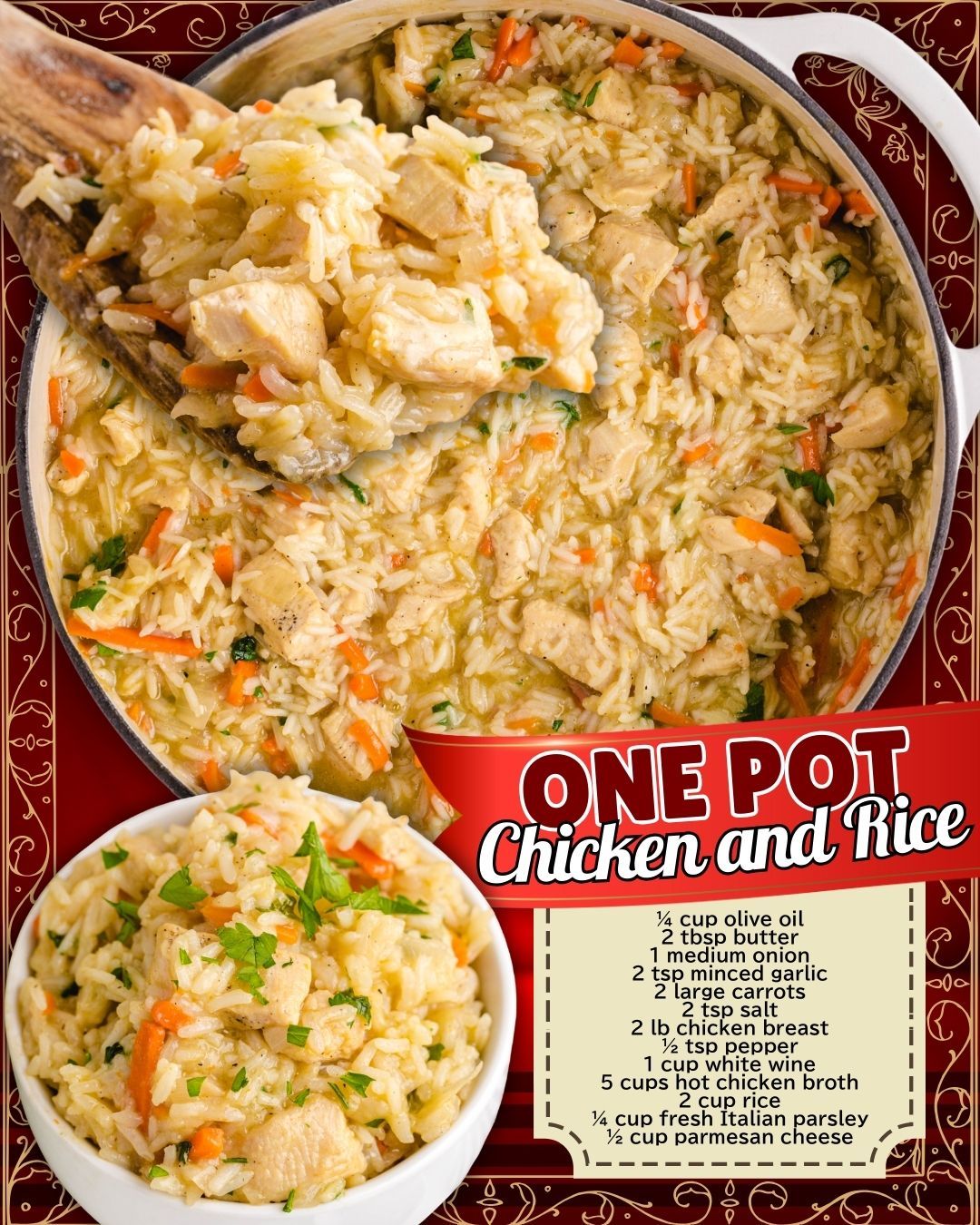
Following the correct sequence is one of the most important regulations of one-pot cooking. Each step builds upon the previous one, creating layers of flavor that develop naturally.
- Heat a large, heavy-bottomed pot over medium heat. Add the olive oil and butter, allowing the butter to melt completely without browning.
- Add the chopped onion and sauté for several minutes until soft and translucent. This step releases natural sugars and forms the flavor base.
- Stir in the minced garlic and diced carrots. Cook briefly, just until fragrant, ensuring the garlic does not burn.
- Season the mixture with salt and pepper, then add the chicken breasts. Allow them to sear lightly on all sides, sealing in moisture.
- Pour in the white wine to deglaze the pot, scraping up any flavorful bits from the bottom. Let the wine simmer until slightly reduced.
- Add the hot chicken broth and bring the mixture to a gentle boil. This step regulates the cooking temperature before adding the rice.
- Stir in the rice, ensuring it is evenly distributed. Reduce the heat to low, cover, and let simmer until the rice is tender and the chicken is fully cooked.
- Once cooked, remove the pot from heat. Stir in the Parmesan cheese and fresh parsley, allowing the residual heat to melt the cheese smoothly.
Serving and Storage:
Proper serving and storage are often overlooked regulations, yet they play a crucial role in maintaining food quality and safety. This dish is best served warm, directly from the pot, allowing the flavors to remain cohesive.
Serve generous portions in shallow bowls, ensuring each serving includes chicken, rice, and vegetables. A light garnish of additional parsley or Parmesan can enhance presentation and aroma.
For storage, allow the dish to cool completely before transferring it to an airtight container. It can be refrigerated for up to three days. When reheating, add a small splash of broth or water to restore moisture and prevent the rice from drying out.
Tips:
These practical tips act as guiding regulations to help you adapt the recipe to your preferences while maintaining its integrity.
- Use hot broth to prevent temperature shock and ensure even cooking.
- Do not over-stir the rice once added, as this can release excess starch.
- Adjust salt gradually, especially if your broth is already seasoned.
- Let the dish rest for a few minutes before serving to allow flavors to settle.
- Choose freshly grated Parmesan for better melting and flavor.
Conclusion:
This One-Pot Chicken and Rice recipe is more than a meal; it is a demonstration of how simple regulations can transform everyday ingredients into something deeply satisfying. By respecting the order of steps, understanding the role of each component, and allowing time for flavors to develop, you create a dish that feels intentional and comforting.
In modern kitchens where efficiency often competes with quality, this recipe proves that the two can coexist. One pot, a handful of ingredients, and a clear structure are all it takes to produce a meal that nourishes both body and spirit.
Whether you are a beginner cook seeking confidence or an experienced home chef looking for a reliable comfort dish, this recipe offers a timeless solution. Simplicity, when guided by thoughtful regulations, can be truly delicious.
FAQ:
Can I use a different cut of chicken?
Yes, chicken thighs can be used for a richer flavor. Adjust cooking time slightly to ensure they are fully cooked.
What type of rice works best?
Long-grain white rice is ideal for this recipe, as it cooks evenly and remains fluffy without becoming mushy.
Is the wine necessary?
While optional, the wine adds acidity and depth. If omitted, substitute with additional broth and a splash of lemon juice.
Can this dish be frozen?
Freezing is possible, but the texture of the rice may change slightly. For best results, consume within a few days of cooking.
How can I make this dish lighter?
Reduce the butter and cheese slightly and increase the proportion of vegetables while maintaining the same cooking regulations.
