
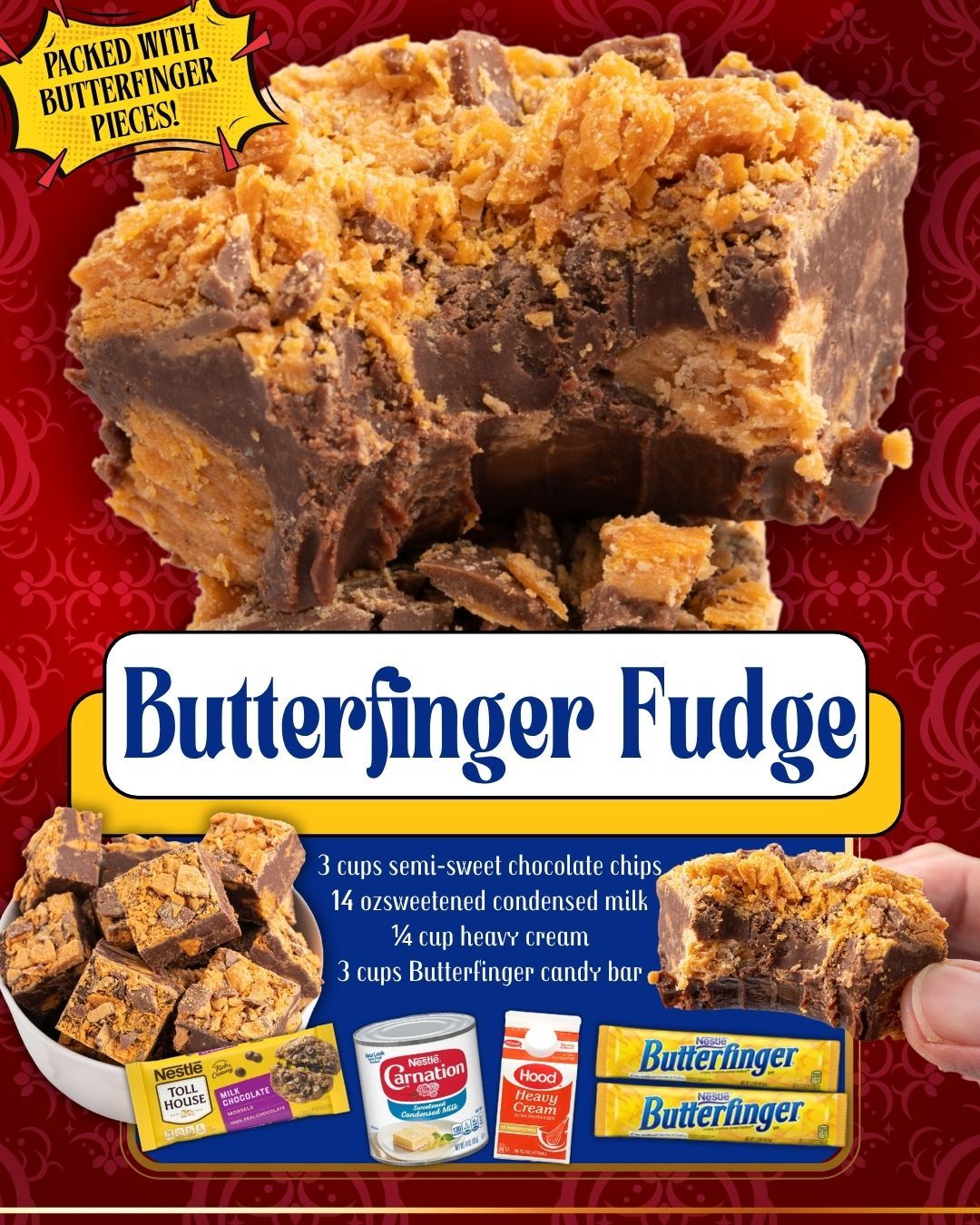
Making Butterfinger Fudge is a straightforward process, but attention to detail will make a noticeable difference.
Follow these steps carefully for best results.
- Prepare your pan: Line an 8×8-inch square pan with parchment paper or foil, leaving some overhang on the sides.
This will make it easier to lift the fudge out later. Lightly grease the lining to prevent sticking. - Heat the chocolate mixture: In a medium saucepan over low heat, combine the semi-sweet chocolate chips,
sweetened condensed milk, and heavy cream. Stir continuously to prevent scorching. - Melt gently: Continue stirring until the chocolate chips are fully melted and the mixture is smooth and glossy.
Avoid high heat, as overheating can cause the chocolate to seize or become grainy. - Add Butterfinger pieces: Remove the saucepan from heat and fold in the chopped Butterfinger candy bars.
Mix gently to distribute them evenly throughout the chocolate base. - Transfer to pan: Pour the fudge mixture into the prepared pan. Use a spatula to smooth the top evenly.
- Chill to set: Place the pan in the refrigerator for at least 2–3 hours, or until the fudge is firm.
- Cut and serve: Once fully set, lift the fudge out using the parchment overhang and cut into uniform squares.
That’s it—no baking, no complex equipment, and minimal cleanup. The result is a professional-quality fudge made right at home.
Serving and Storage
Butterfinger Fudge is versatile when it comes to serving. It can be presented casually on a dessert tray or packaged neatly as a gift.
Because of its richness, small squares go a long way.
For serving, allow the fudge to sit at room temperature for a few minutes after removing it from the refrigerator.
This softens the texture slightly and enhances the flavor.
When it comes to storage, proper handling will keep your fudge fresh and delicious:
- Store in an airtight container to prevent drying out.
- Keep refrigerated for up to two weeks for best quality.
- For longer storage, freeze the fudge for up to three months. Thaw overnight in the refrigerator before serving.
Layering the fudge with parchment paper between pieces will help prevent sticking and preserve its shape.
Tips
While this recipe is forgiving, a few expert tips can elevate your results even further:
- Use low heat: Chocolate is sensitive to high temperatures. Gentle heat ensures a smooth finish.
- Chop evenly: Cutting the Butterfinger bars into uniform pieces helps distribute crunch evenly.
- Customize texture: For extra crunch, sprinkle additional Butterfinger pieces on top before chilling.
- Clean cuts: Use a sharp knife warmed with hot water for neat, professional-looking squares.
- Balance sweetness: Semi-sweet chocolate works best, but dark chocolate can be used for a less sweet version.
These small adjustments can make a noticeable difference in both presentation and taste.
Conclusion
Butterfinger Fudge is more than just a dessert—it’s a celebration of contrasting textures and comforting flavors.
With minimal ingredients and a simple process, it delivers impressive results that rival bakery-quality confections.
Whether you are an experienced home cook or a beginner in the kitchen, this recipe provides a reliable foundation for success.
Its adaptability allows you to personalize it for different occasions, while its straightforward preparation makes it ideal
for busy schedules.
By following the guidance in this article, you can confidently create a dessert that delights friends, family, and yourself.
Once you try it, Butterfinger Fudge is likely to become a regular addition to your recipe collection.
FAQ
Can I use milk chocolate instead of semi-sweet?
Yes, but keep in mind that milk chocolate is sweeter. If you prefer a balanced flavor, consider mixing milk and dark chocolate.
Do I need a candy thermometer?
No thermometer is required. This recipe relies on melting rather than precise temperature control, making it beginner-friendly.
Can I make this fudge ahead of time?
Absolutely. Butterfinger Fudge stores well and can be prepared several days in advance, making it ideal for events and holidays.
Why is my fudge too soft?
Soft fudge usually results from insufficient chilling time or inaccurate measurements. Ensure the fudge is fully set before cutting.
Is this recipe suitable for gifting?
Yes. When wrapped properly and kept cool, Butterfinger Fudge makes a thoughtful and delicious homemade gift.
