
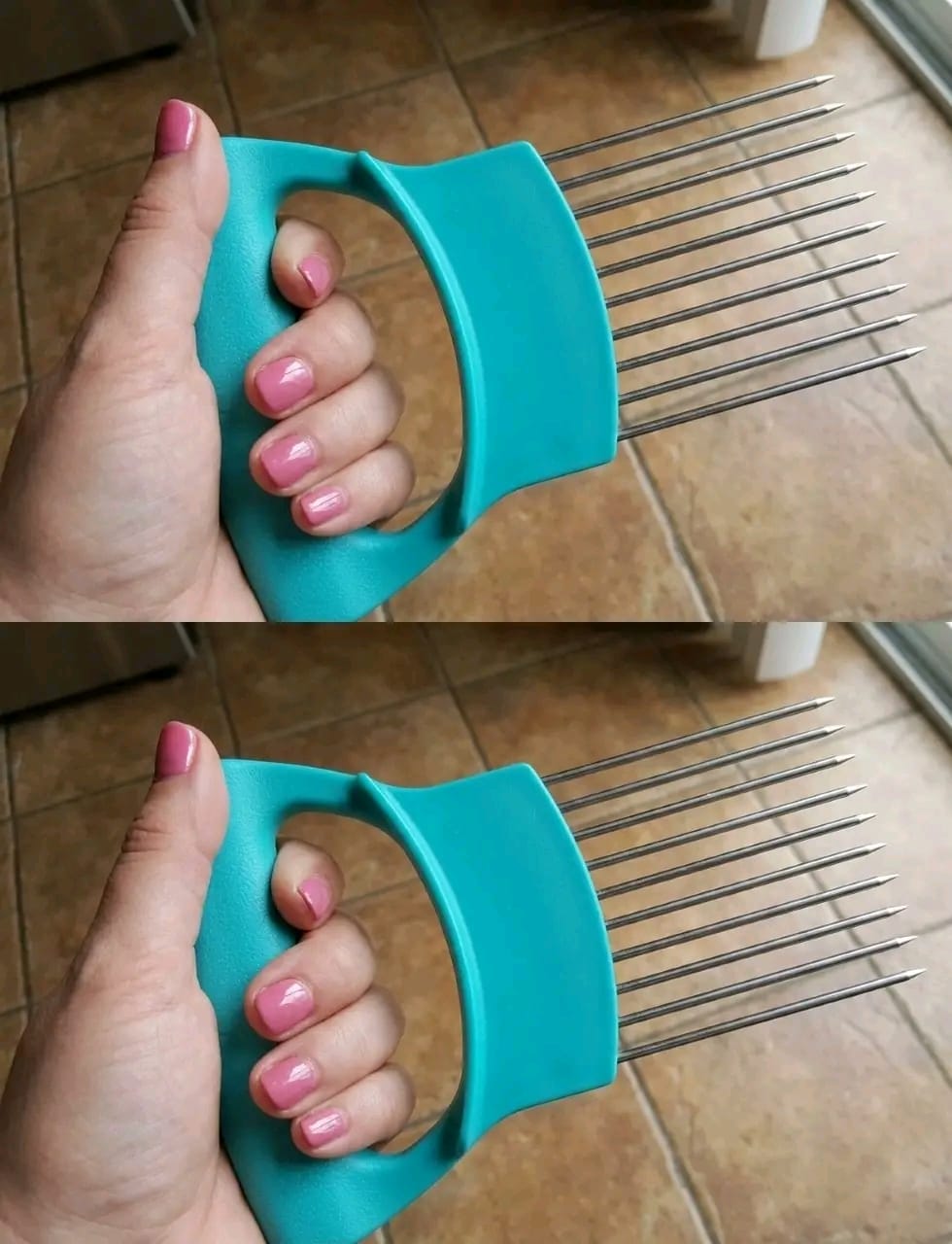
- Speed: Slice an entire onion in seconds, making meal prep quicker.
- Consistency: Achieve uniform thickness for each slice, which is ideal for caramelizing, frying, or adding to salads.
- Safety: The design keeps fingers away from sharp blades, making it a great option for kids learning to cook or individuals with arthritis.
- Control: It works well with small or oddly shaped vegetables that can be challenging to hold.
- Bonus: Faster slicing means less exposure to onion vapors, resulting in fewer tears.
What You Can Slice With It
This versatile tool can slice a variety of vegetables and fruits, including:
- Onions (yellow, red, white)
- Potatoes (for chips or scalloped dishes)
- Cucumbers (for pickles or salads)
- Zucchini or summer squash
- Apples (for pies or snacks)
- Carrots (if not too thick)
However, it’s best to avoid soft fruits like bananas and ripe tomatoes, very hard roots such as sweet potatoes and beets, or anything with a tough core.
How to Use It Safely & Effectively
To ensure safe and effective use of the slicer, follow these steps:
- Stabilize: Place the slicer on a stable surface; using a non-slip mat can enhance safety.
- Prepare: Trim the ends off the vegetable so it sits flat on the slicer.
- Slice: Press firmly and evenly through the blades, using a pusher or the heel of your hand for better control.
- Clean: Rinse the slicer immediately after use to prevent food from getting stuck between the blades.
- Dry: Thoroughly dry the slicer to prevent rust (if metal) or odor buildup (if plastic).
Pro Tip: Sprinkle sliced onions with a pinch of salt to reduce their sharpness and enhance their sweetness.
