
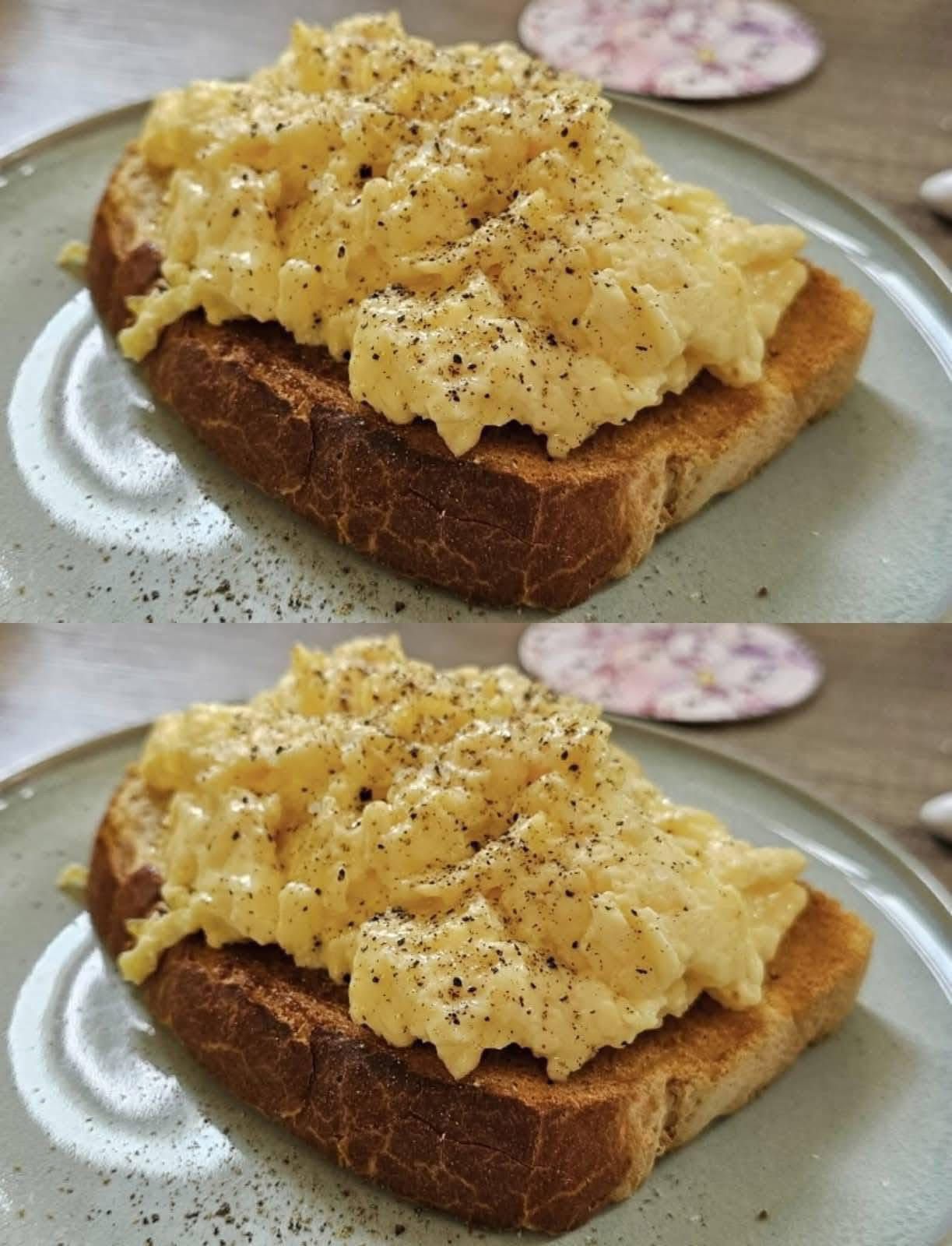
The Method: French-Style Creamy Scrambled Eggs
This technique, inspired by French culinary traditions, yields soft, custardy, and delicate curds.
Ingredients (Serves 2)
- 4 large, fresh eggs
- Pinch of salt
- 1 tablespoon (14 g) cold, unsalted butter, cubed
- 1 tablespoon (15 ml) heavy cream, crème fraîche, or full-fat milk (optional, for extra richness)
Equipment Needed
- A non-stick or heavy-bottomed saucepan (not a large skillet)
- A rubber spatula
Instructions
- Whisk Gently: Crack the eggs into a bowl and add a pinch of salt to help break down the proteins for a tender result. Whisk just until the yolks and whites are fully blended.
- Preheat the Pan: Place your saucepan over low heat and add the butter. Allow it to melt and foam slightly without browning.
- Cook Slowly: Pour the eggs into the pan. They should sizzle gently, not violently. Let them sit for about 10–15 seconds until a thin layer begins to set on the bottom.
- Begin Stirring: Use a rubber spatula to stir slowly and constantly, employing a folding motion while scraping the bottom and sides of the pan.
- Form Curds: After a few minutes, soft, small curds will begin to form. Keep stirring and folding. If the pan gets too hot, remove it from the heat for about 15 seconds before returning it. This process should take 8–12 minutes.
- The Perfect Finish: When the eggs are mostly cooked but still look wet and shiny, remove the pan from the heat.
- Add Final Enrichment (Optional): Stir in the cold cream or crème fraîche to stop the cooking and enhance creaminess.
- Serve Immediately: Plate the eggs on warmed plates to ensure they finish setting perfectly on the way to the table.
The Method: Classic Fluffy American-Style Scrambled Eggs
For those who prefer larger, fluffier curds, this method is ideal.
Instructions
- Whisk with Liquid: Combine the eggs with a pinch of salt and 1 tablespoon of milk or water per egg. The added liquid creates steam, resulting in fluffiness.
- Medium Heat: Melt butter in a non-stick skillet over medium heat until it begins to foam.
- Pour and Let Set: Pour in the eggs and allow them to set around the edges for about 30 seconds.
- Push and Fold: Use a spatula to push the set eggs from the edges toward the center. Tilt the pan to allow uncooked egg to flow into the empty spaces.
- Repeat: Continue this process until the eggs are mostly set but still slightly runny on top.
- Finish Off Heat: Remove from the heat and let residual warmth complete the cooking. Serve immediately.
Pro Tips & Flavor Variations
- Seasoning: Add black pepper at the end to avoid a grayish tint that can occur if cooked too long.
- The Best Pan: A heavy non-stick saucepan is ideal for creamy eggs, while a non-stick skillet works best for fluffy eggs.
- Don’t Crowd the Pan: Cook in batches if necessary, as overcrowding can lead to steaming.
- Warm Your Plates: Cold plates can cool eggs instantly; warm them in a low oven for a few minutes.
Simple Flavor Boosters (add during the last minute)
- Fresh Herbs: Chives, parsley, dill, or tarragon
- Cheese: Sharp cheddar, goat cheese, or feta
- Rich & Savory: A spoonful of pesto or truffle zest
- Creamy Indulgence: Cream cheese or mascarpone
In conclusion, perfect scrambled eggs are within reach by following these techniques and tips. Whether you opt for the creamy French style or the fluffy American method, the key lies in patience and attention to detail. Enjoy your delicious creation, and elevate your breakfast experience!
