
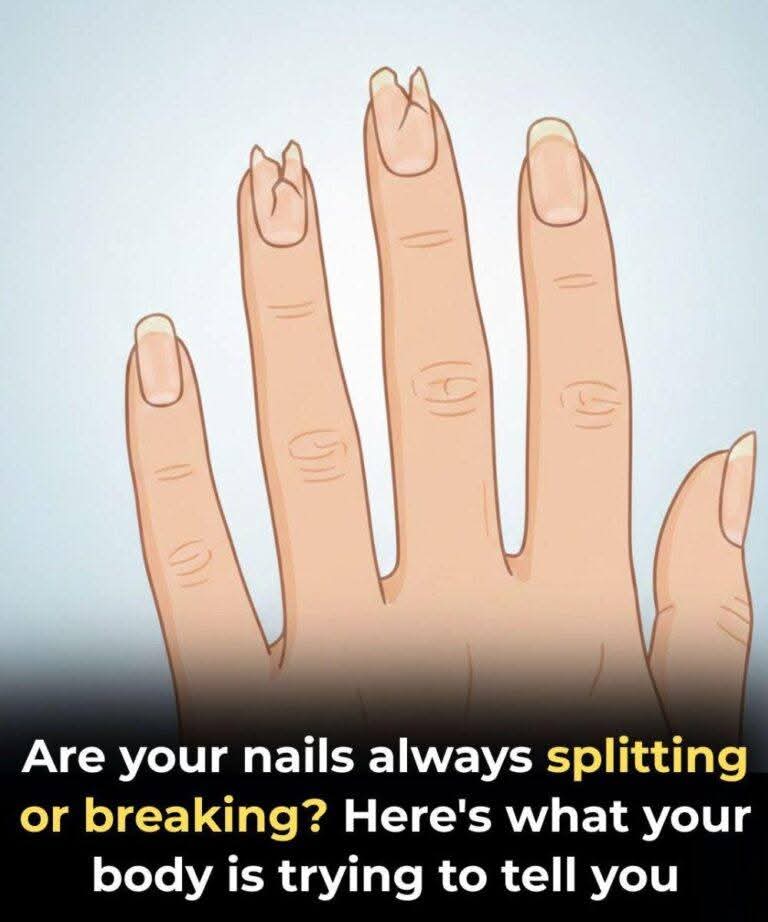
Brittle, Cracked, or Peeling Nails: Possible Thyroid Disorders or Vitamin Deficiencies
Dry, fragile nails are often caused by frequent handwashing or chemical exposure. But persistent brittleness can sometimes be linked to thyroid disorders or vitamin deficiencies, particularly iron or biotin deficiency.
If your nails break easily despite moisturizing and proper care, a medical check-up may help uncover the cause.
Spoon-Shaped Nails: A Sign of Iron Deficiency Anemia
Nails that curve upward at the edges, forming a spoon-like shape (a condition called koilonychia), may be associated with iron deficiency anemia. If you notice this unusual shape along with fatigue or weakness, consider having your iron levels tested.
Clubbing: An Indicator of Lung or Heart Disease
Clubbing occurs when the fingertips enlarge and the nails curve downward over time. This condition can develop gradually and is sometimes linked to lung or heart disease. Because it often progresses slowly, many people don’t notice it right away.
If you suspect clubbing, a medical evaluation is recommended.
Horizontal Lines (Beau’s Lines): Signs of Physical Stress
Deep horizontal grooves across the nail may appear after severe stress, illness, or infection. They can indicate that nail growth temporarily stopped due to physical stress on the body. While they may grow out over time, recurring lines could signal an underlying health issue.
When Should You Be Concerned?
It’s important to remember that nails grow slowly, so changes may reflect health events from weeks or even months earlier. Not every abnormal nail appearance means something serious. However, if a change is sudden, persistent, or accompanied by other symptoms, it’s better to be cautious.
Your nails are more than just a cosmetic detail; they can be subtle messengers from your body. By paying attention to their condition and seeking medical advice when something looks unusual, you can catch potential health concerns early and take charge of your health journey.
