
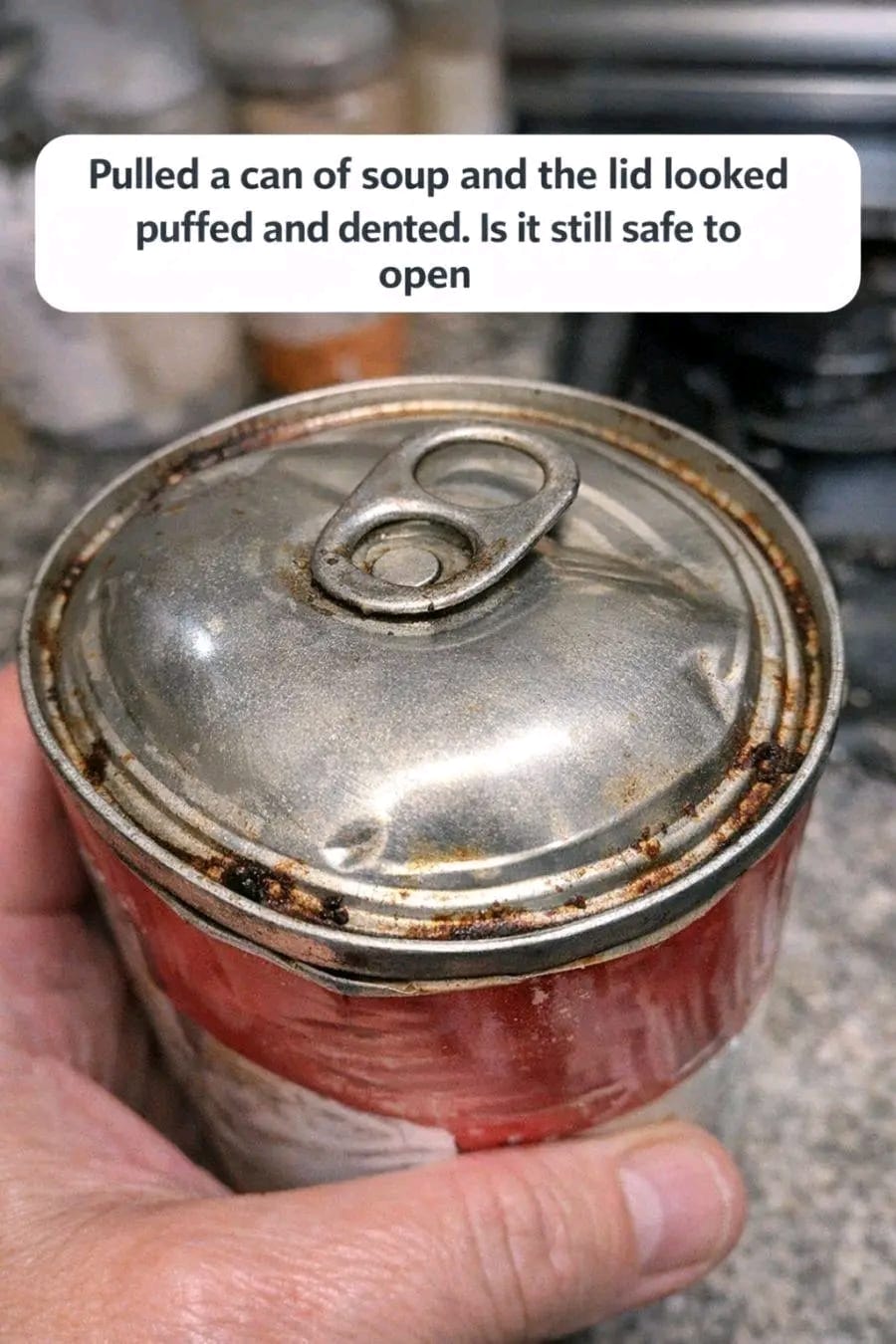
When a Dented Can Might Still Be Safe—and When It’s Not
Not all dents are cause for concern. If the dent is shallow and not located on the seams or the lid, the can might still be safe to consume. However, deep, sharp dents or those located along the seams or lid pose a greater risk of contamination.
Inspecting the can for any signs of leakage, rust, or swelling in addition to the dent can help determine its safety. If any of these signs are present, it’s best to err on the side of caution and discard the can.
Simple Visual Checks to Decide If You Should Toss It
Before opening a can, perform a thorough visual inspection. Look for signs of swelling, rust, or leakage, which are clear indicators of spoilage. Check the seams and lids for any signs of damage or bulging.
If a can has any noticeable defects, it’s safer to discard it. Trust your instincts; if something looks off, it’s not worth the risk to your health.
The Smell Test and Other Signs Once a Can Is Opened
Once a can is opened, conduct a smell test immediately. A foul or unusual odor is a strong indicator that the food has spoiled and should not be consumed. The appearance of the contents can also provide clues; any discoloration, cloudiness, or mold is a red flag.
If the can emits a spray or foam upon opening, this can suggest fermentation or spoilage, and the food should be discarded immediately.
Why You Should Never Taste Food From a Suspicious Can
Tasting food from a suspicious can, even a small amount, can be dangerous. If the food is contaminated with toxins like those produced by Clostridium botulinum, ingestion can lead to severe illness or even death.
Rely on visual and olfactory cues to assess safety, and avoid tasting food from any can that raises concerns, no matter how minor they may seem.
