
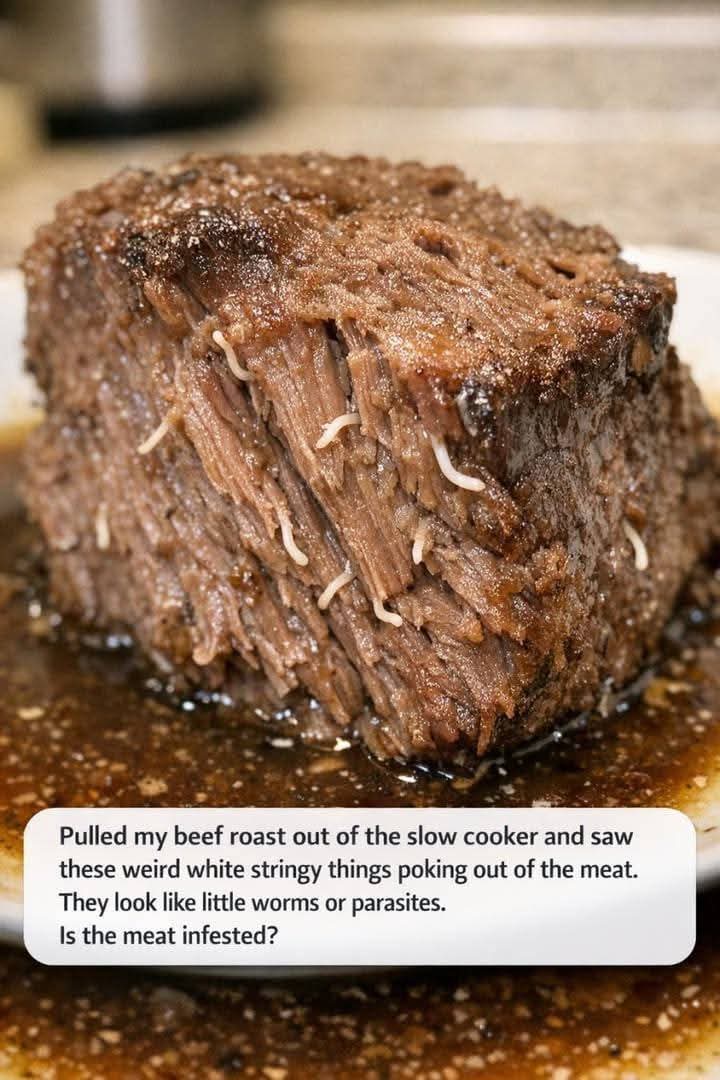
Normal White Strings Versus True Parasites: Key Visual Differences
While it’s easy to mistake these white strings for something more concerning, there are distinct differences between normal connective tissue and parasites. Connective tissue is usually soft, gelatinous, and can be easily pulled apart with a fork. It often appears in clusters or bands.
Parasites, on the other hand, would appear as distinct, separate entities embedded within the meat. They typically have a more uniform shape and are not as easily broken apart. Additionally, parasites are rare in commercially sold beef due to stringent inspection and safety measures.
When to Worry: Smell, Color, and Texture Red Flags
While the white strings themselves are usually harmless, other indicators can reveal whether your meat is spoiled. Check for an off-putting odor; fresh beef should have a clean, slightly metallic smell. A sour or rancid odor is a red flag.
Examine the color and texture as well. The meat should be a consistent color—usually a rich brown after cooking—and should not have any slimy or sticky coating. If the meat feels tacky or has a greenish hue, it may not be safe to eat.
Safe Cooking Temperatures That Kill Parasites and Bacteria
To ensure the safety of your cooked beef, it’s crucial to reach the appropriate internal temperature. The USDA recommends cooking beef to a minimum internal temperature of 145°F (63°C), followed by a three-minute rest time. Slow-cooked beef often exceeds this temperature, especially after hours in the cooker.
These temperatures are sufficient to kill most parasites and bacteria, ensuring that your meal is safe to consume. Using a meat thermometer can help you verify the internal temperature and provide peace of mind.
Common Cuts of Beef Most Likely to Show These White Strings
Certain cuts of beef are more prone to displaying these white strings due to their higher connective tissue content. Cuts such as chuck roast, brisket, and round roast are common examples. These cuts benefit from slow-cooking methods because the extended cooking time allows the connective tissue to break down and soften.
These cuts are often more affordable and flavorful, making them popular choices for slow-cooking recipes. However, the presence of these white strings is a typical characteristic of these cuts and should not be a cause for concern.
