
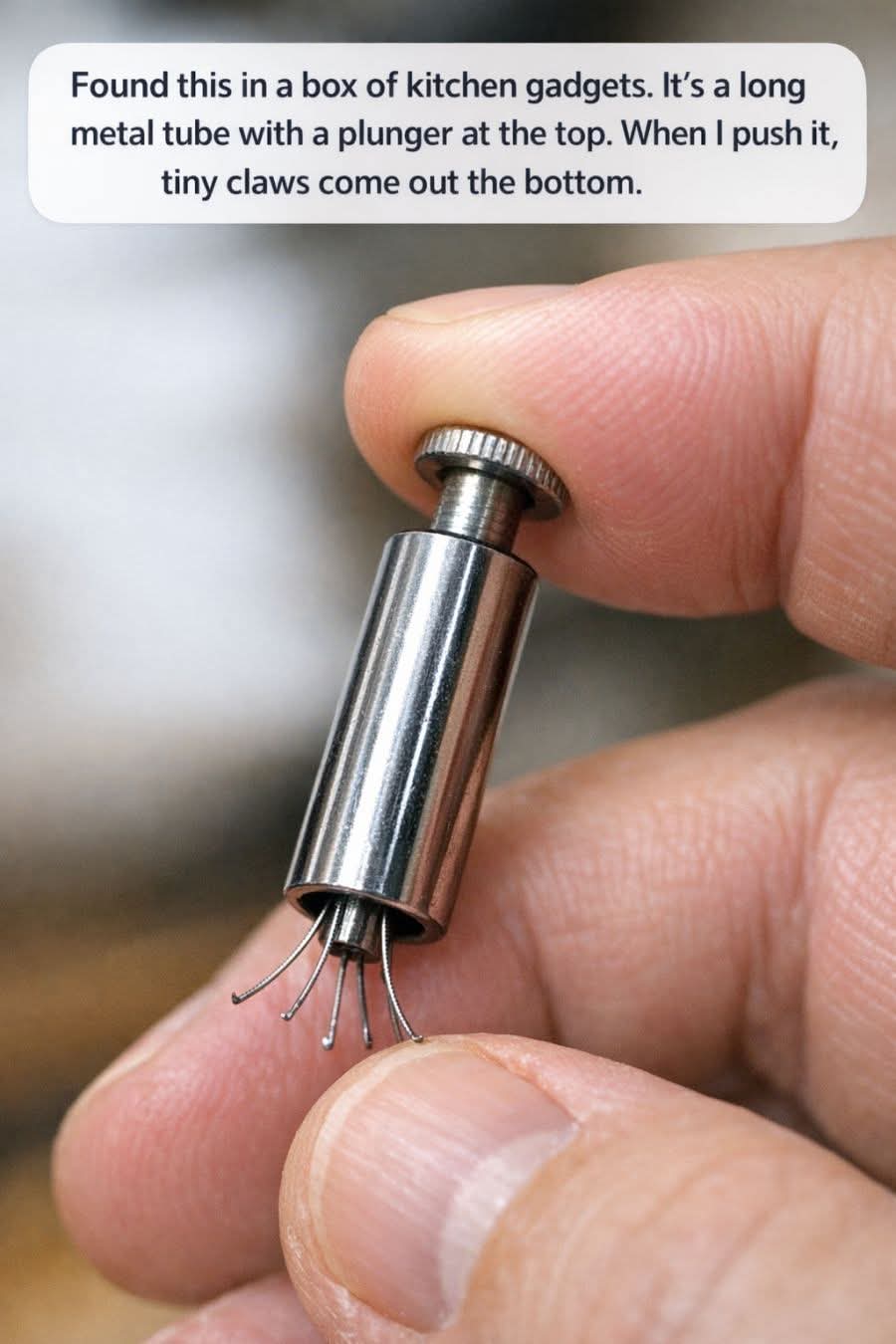
Variations: From Pickle Picker to Olive and Cocktail Grabber
While the original design was intended for pickles, variations of the tool quickly emerged to cater to other culinary needs. Olive grabbers and cocktail pickers, for instance, adapted the basic design for retrieving olives from narrow jars or plucking cherries from cocktails.
These adaptations often featured slight modifications, such as smaller claws or different materials, to suit the specific items they were meant to handle. Despite these variations, the core functionality remained the same, underscoring the versatility and enduring appeal of the basic design.
How To Safely Use a Vintage Pickle Picker Today
Using a vintage pickle picker today requires a gentle touch, given its age and potential fragility. Begin by ensuring the tool is clean and free from rust or corrosion. When ready to use, position the tool over the jar and depress the plunger to open the claws.
Gently guide the claws around the pickle or item of choice, then release the plunger to secure it. Carefully lift the item out of the jar, ensuring a steady hand to avoid spills. With proper handling, a vintage pickle picker can still be an effective and charming addition to modern kitchens.
Cleaning and Maintaining Old Metal Kitchen Tools
Maintaining vintage kitchen tools like a pickle picker involves regular cleaning and care to preserve their functionality. After each use, rinse the tool with warm, soapy water, paying special attention to the claw mechanism to remove any residue.
To prevent rust, thoroughly dry the tool immediately after washing. For deeper cleaning, a mixture of baking soda and vinegar can be used to scrub away any tarnish or build-up. Regular maintenance, including lubrication of the spring mechanism with food-safe oil, can extend the tool’s lifespan and keep it in working order.
Clues That Confirm Yours Is a True Vintage Piece
Authenticating a vintage pickle picker involves examining several key features. Look for signs of wear and patina that indicate age, such as slight discoloration or minor dents. Vintage models often feature a maker’s mark or stamp, usually found on the tube or near the plunger.
The construction materials can also provide clues; older models are typically made from stainless steel or chrome-plated metals, while modern replicas might use cheaper alloys. The craftsmanship and design details, such as the precision of the claws and the smoothness of the plunger mechanism, further distinguish true vintage pieces from newer reproductions.
