
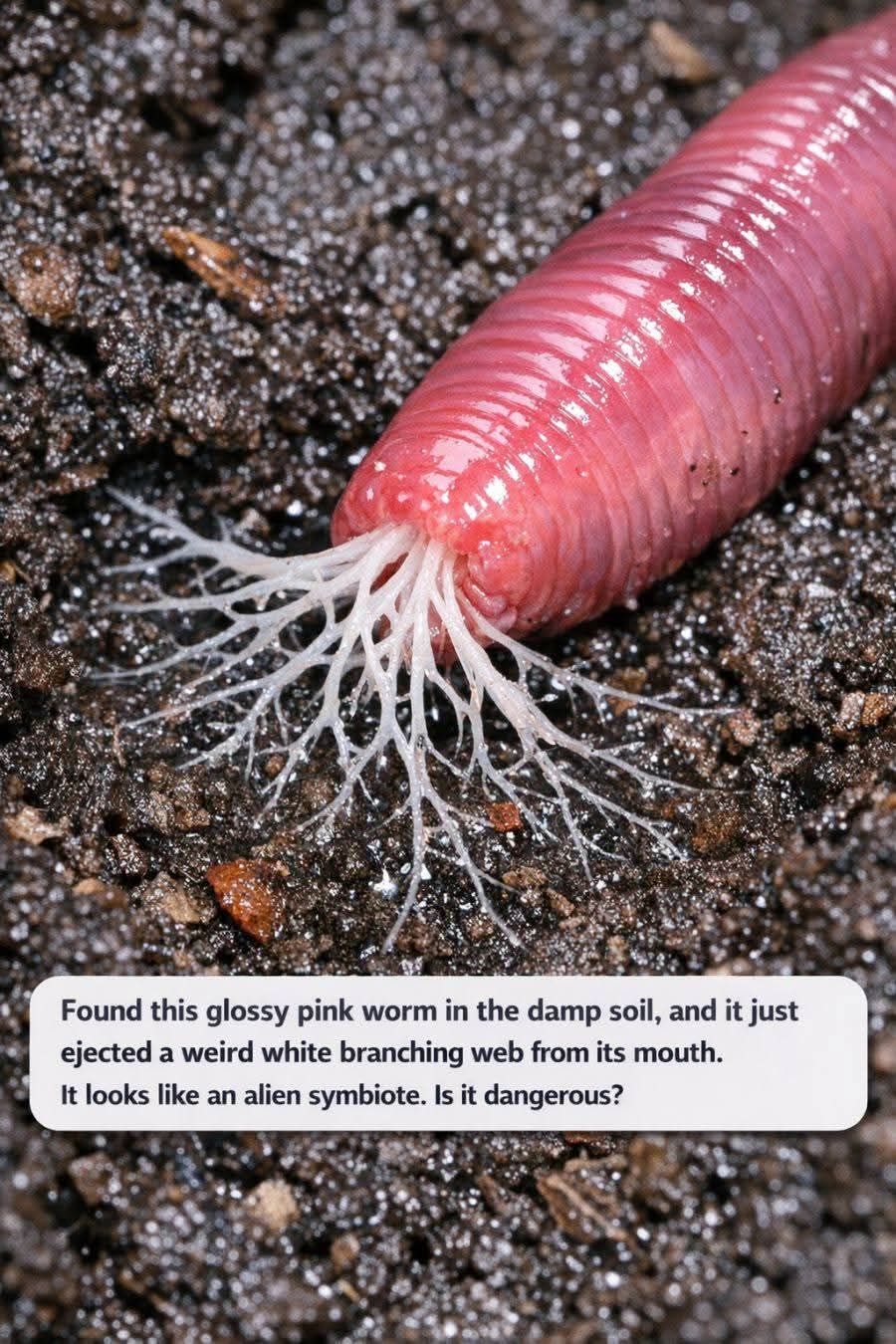
Have you ever encountered a strange, glossy pink worm while gardening or exploring your backyard? This peculiar sight can evoke a mix of curiosity and unease, especially when the worm ejects a bizarre white, web-like structure from its mouth. Is it an alien invader or just a misunderstood inhabitant of the earth? In this article, we will unravel the mysteries of ribbon worms, shedding light on their identity, behavior, and ecological significance.
What You Probably Saw: Meet The Ribbon Worm
The creature you encountered is most likely a member of the ribbon worm family, scientifically known as Nemertea. Ribbon worms are a diverse group with over 1,000 species, varying significantly in size, color, and habitat. These worms can range from a few millimeters to several meters long, although those typically found in gardens are often smaller. Known for their elongated, flattened bodies, ribbon worms exhibit distinctive coloration, including shades of pink, red, orange, or even green. Their glossy appearance is due to the mucus they secrete, which aids in movement through soil or water and can assist in capturing prey.
Why It’s Pink And Glossy In Damp Soil
The pink and glossy appearance of ribbon worms is primarily due to their skin and the mucus they produce. Their skin is often translucent, allowing the underlying tissues to show through, which can give them a pink hue. This coloration serves multiple purposes, including camouflage and warning potential predators of their unpalatability. The glossiness results from the mucus covering their bodies, which helps keep their skin moist and aids in locomotion. Ribbon worms thrive in damp environments, making them more likely to be found in moist soil or near bodies of water.
That ‘Alien’ White Web: How The Proboscis Really Works
The white, branching web you observed is actually the proboscis of the ribbon worm, a unique feeding and hunting organ. Unlike a tongue or mouth, the proboscis is a long, extendable tube that can be rapidly everted from a cavity in the worm’s body called the rhynchocoel. When hunting, the worm ejects this structure to ensnare its prey. The proboscis is often equipped with toxins or sticky substances that help immobilize prey, and in some species, it may have a sharp stylet used to pierce and inject toxins into victims. This remarkable adaptation allows ribbon worms to capture a variety of prey, including small invertebrates and other worms.
Is It Dangerous To Humans Or Pets?
Despite their startling appearance and predatory nature, ribbon worms pose no danger to humans or pets. The toxins they use are specifically adapted for subduing small prey and are not harmful to larger animals. Contact with a ribbon worm, even if it ejects its proboscis, is unlikely to cause any adverse effects. However, as with any wildlife encounter, it is wise to avoid unnecessary handling. Some individuals may have skin sensitivities or allergies to the slime or secretions of various invertebrates, so washing hands after contact is advisable.
