
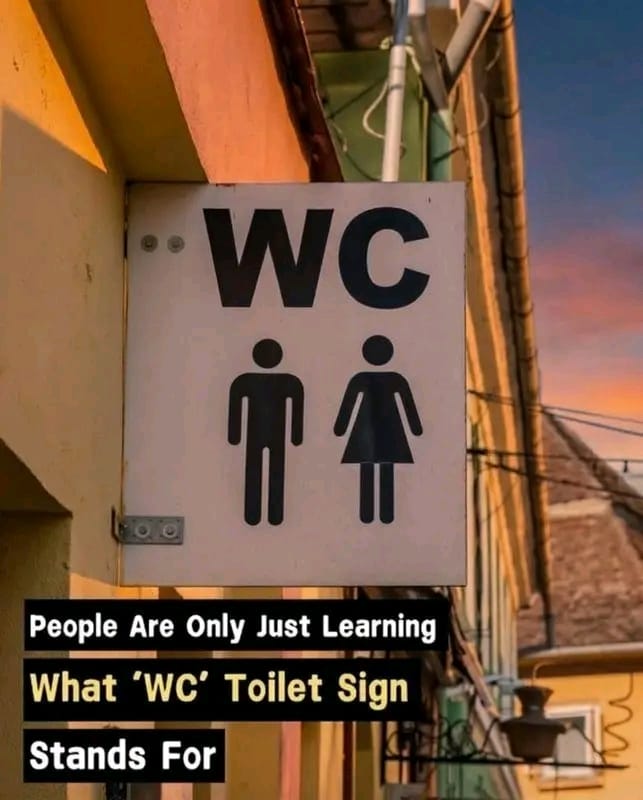
The Spread of WC Across Europe
The popularity of WC signs didn’t remain confined to England. As British engineering, culture, and industrial influence spread across Europe, so did the terminology.
Countries like Germany, Austria, France, and Italy adopted WC as a convenient abbreviation for restroom signage. Public buildings, hotels, train stations, and airports began using “WC” to indicate restroom facilities.
In German, for instance, “WC” became the standard term, pronounced “veh-tse” or simply “we-cé,” and is still widely used today. Similarly, in Italy, “WC” is commonly understood, even though the native term might be “gabinetto” or “toilette.”
Interestingly, the adoption of WC shows how functional language can cross borders. Even when local words existed, the simplicity and universality of WC made it an appealing choice for signage, especially in spaces frequented by travelers.
Why WC Became the Preferred Term
In English, terms like toilet, lavatory, restroom, and bathroom all refer to similar facilities. So why did WC become dominant internationally?
1. Abbreviation is Universal: WC is short, easy to print, and recognizable even to non-native speakers.
2. Neutrality: Words like “toilet” or “bathroom” carry cultural nuances. WC is neutral and formal.
3. Public Signage: WC works well on signs, maps, and guides, particularly in crowded international spaces like train stations or airports.
4. Historic Influence: British travel and trade in the 19th and early 20th centuries helped propagate WC signage across continents.
Even today, travelers can recognize WC even without knowing the local language. That universality has helped WC persist in Europe, Asia, and parts of Africa.
Variations of Restroom Terms Around the World
Although WC is widely recognized, different countries have unique ways of labeling restrooms:
– USA & Canada: “Restroom” or “Bathroom” is common; WC is rare.
– UK: WC is still used, but “toilet” or “loo” is more colloquial.
– Germany & Austria: WC is standard; “Toilette” is also common.
– France: WC is universal, but “toilettes” is frequently written out.
– Italy: WC is common alongside “gabinetto” or “toilette.”
– Japan: Modern signs often use WC alongside pictograms, sometimes incorporating English words like “Toilet.”
The persistence of WC in many countries highlights its international practicality, even as local terms coexist.
