
In a world dominated by disposable products and fleeting trends, there lies a remarkable intelligence in the everyday objects we often take for granted. These subtle design features—like a small hole, an unassuming arrow, or a patch of fabric—represent years of thoughtful iteration and problem-solving. By understanding their purposes, we not only enhance our user experience but also reconnect with a legacy of design that values functionality and elegance.
The Padlock’s Paradox: A Lesson in Resilience
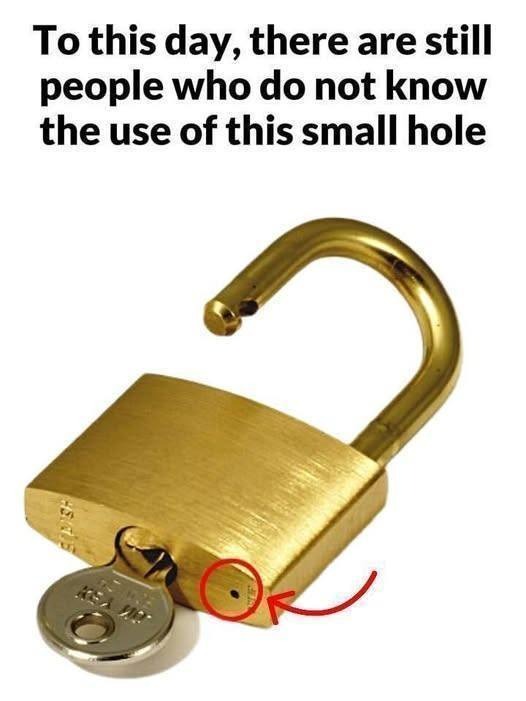
Take the classic hardened steel padlock, a symbol of security. Upon close inspection, you’ll often find a tiny, unassuming hole at its base. Far from a manufacturing flaw or mere aesthetic detail, this pinhole is a masterstroke of practical engineering, solving two critical problems:
The Drainage Port
A lock’s greatest vulnerability is often not the bolt, but the environment. When exposed to rain, humidity, or condensation, water can seep into the shackle channel and internal mechanism. Trapped inside, this moisture leads to corrosion and rust, which can slowly freeze the lock’s moving parts. This small hole provides a dedicated escape route, allowing water to drain out freely and significantly prolonging the lock’s functional life.
The Maintenance Access
When a lock begins to stiffen—a common issue with older or heavily used padlocks—this hole becomes a service port. A single drop of a lightweight lubricant (like graphite powder or a dedicated lock fluid) applied here will wick into the core mechanism, restoring smooth operation without the need for disassembly. It is, in essence, the lock’s own built-in maintenance hatch.
A Note on Evolution
It’s important to recognize that this feature speaks to a specific era of design. Modern high-security or marine-grade padlocks often forgo the drainage hole entirely, employing advanced seals, specialized coatings, or pressurized designs to create a truly waterproof barrier. The presence or absence of the hole, therefore, tells a story about the lock’s intended use and engineering philosophy.
