
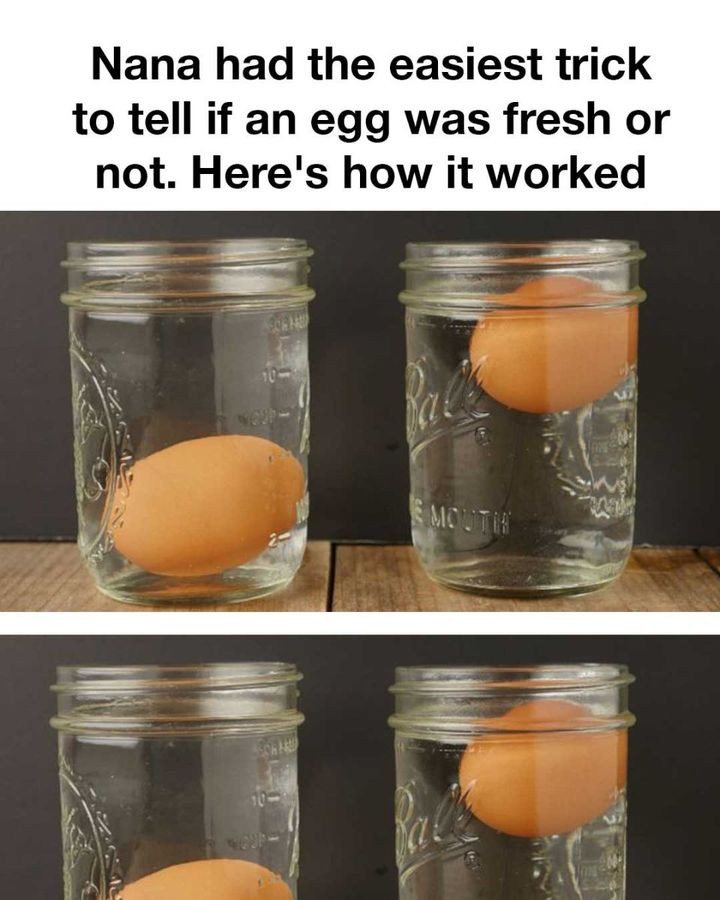
This simple check can be done in seconds and provides a clear indication of your egg’s freshness.
Why Nana’s Method Works
Nana’s method works due to the changes in the egg’s air cell. As an egg ages, the contents contract and moisture evaporates through the porous shell, causing the air cell to expand. This increased air pocket affects the egg’s buoyancy. Fresh eggs have a smaller air cell, making them denser, so they lay flat on the bottom. Older eggs have a larger air pocket, which makes them more buoyant and causes them to stand or float. This physical principle is the science behind the simplicity of Nana’s test.
Comparing Other Egg Freshness Testing Methods
While Nana’s water test remains popular, several other methods exist to check egg freshness:
– Candling: Shining a light through the egg to observe internal structures, commonly used in agriculture.
– Crack Test: Cracking the egg open to inspect the yolk and whites; fresh eggs have firm, well-rounded yolks and thick whites.
– Shake Test: Shaking the egg near your ear; fresh eggs should not produce sound, while older eggs might slosh due to thinner whites.
Though effective, some of these methods require experience or equipment, whereas Nana’s water test remains straightforward and accessible to everyone.
Common Misconceptions About Egg Freshness
There are several myths regarding egg freshness:
– Cracked Eggs: Eggs with minor cracks should be discarded immediately. While true for cracked eggs that float, minor cracks can be acceptable depending on storage.
– Cloudy Egg Whites: A cloudy egg white indicates spoilage. In fact, fresh eggs have cloudy whites due to carbon dioxide not yet escaping.
