
In today’s fast-paced world, where convenience often trumps quality, it’s crucial to ensure the freshness of our staple ingredients, especially eggs. These versatile powerhouses are essential in countless recipes, but using an old or spoiled egg can ruin your dish and even pose health risks. As more people embrace home cooking and traditional methods, the need for reliable freshness tests has become increasingly important. Discover Nana’s simple yet effective technique for ensuring that your eggs are always at their best.
The Importance of Egg Freshness
Fresh eggs are vital not only for their culinary quality but also for safety. They provide better texture, taste, and nutritional content compared to older eggs. In baking, fresh eggs contribute to improved rising and structure. From a health perspective, consuming stale or bad eggs can lead to foodborne illnesses, such as salmonella. Understanding the importance of egg freshness can prevent culinary disasters and protect your health.
Nana’s Simple Trick for Testing Egg Freshness
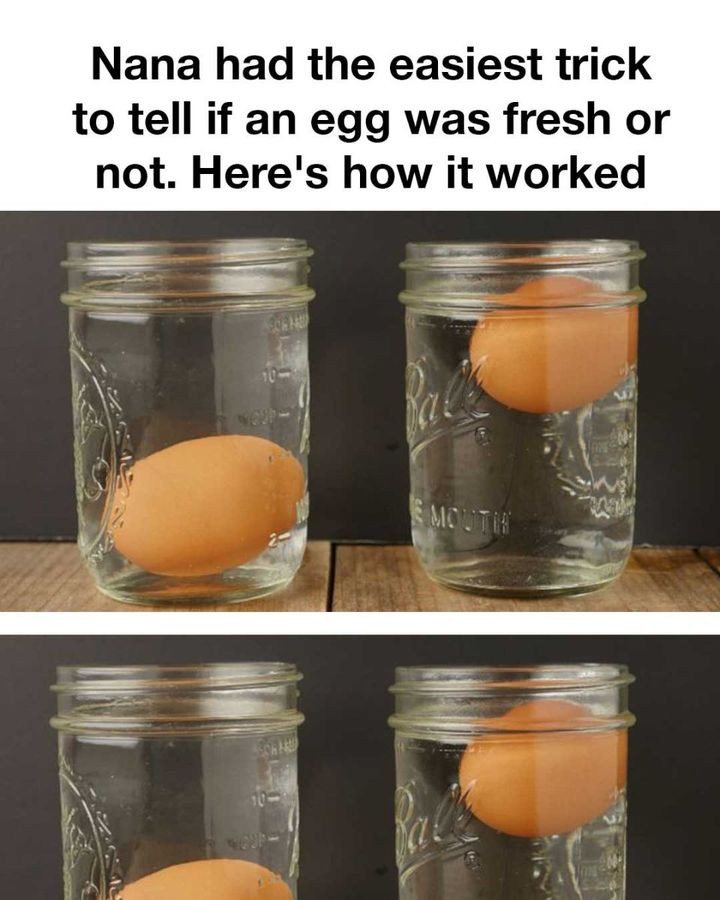
Nana’s trick for testing egg freshness is delightfully simple and requires no special equipment—just a bowl of water. This age-old method involves placing the egg in water and observing its behavior. The insight behind this technique lies in the natural changes that occur inside an egg over time. As eggs age, the small air pocket inside them grows larger, which can be easily detected using the water test.
Step-by-Step Guide to Nana’s Egg Freshness Test
Here’s how you can perform Nana’s egg freshness test at home:
1. Fill a bowl with cold water, ensuring it’s deep enough to completely submerge an egg.
2. Gently place the egg in the bowl of water.
3. Observe the position of the egg:
– If it sinks to the bottom and lays flat on its side, it is very fresh.
– If it sinks but stands upright on the bottom, it is still safe to eat but not as fresh and should be used soon.
– If it floats to the top, it is no longer fresh and should be discarded.
