
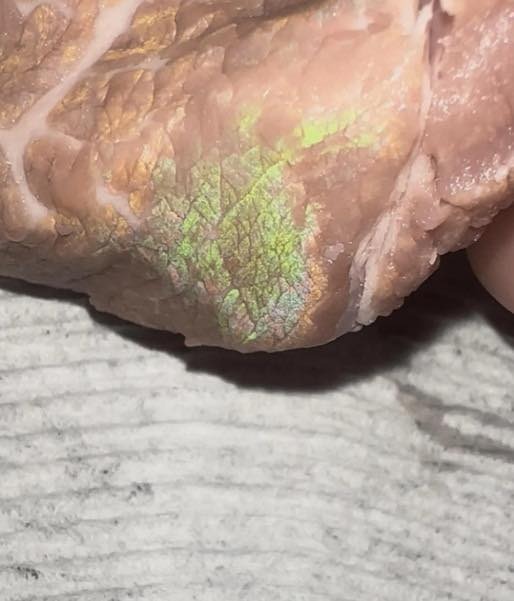
Have you ever opened your fridge to find a slice of roast beef shimmering with an array of colors? This dazzling display can be both captivating and confusing, leaving you to wonder if your meat has gone bad. Fear not! What you’re witnessing is a fascinating optical phenomenon rooted in science, not spoilage. Let’s delve into the reasons behind this iridescence and what it means for your deli meats.
The Science Behind Iridescent Meat
Meat is not just a simple slab; it’s a complex arrangement of muscle fibers that resemble tightly woven strings. When deli meats, particularly whole-muscle cuts like roast beef, corned beef, or turkey breast, are sliced against the grain, they create microscopic ridges on the surface. These ridges act like nature’s own diffraction grating.
When white light, whether from your kitchen bulb or sunlight, strikes these ridges, it splits into its component wavelengths—similar to how a prism works. Each color reflects at slightly different angles, resulting in the mesmerizing shifting iridescence that you see. This phenomenon, known as structural coloration, is the same principle that gives peacock feathers, butterfly wings, and even CDs their vibrant appearances.
## Why Some Meats Exhibit More Shine
